


3-Day Narcissistic Abuse & Recovery Retreat with Ramani Durvasula
Healing Trauma & Breaking the Cycles of Emotionally Abusive Relationships
- Speakers:
- Ramani Durvasula, PhD, LCP | Catherine Barrett, PsyD, MFT
- Duration:
- 2.5 Days
- Language:
- Presented in EN and FR
- Product Code:
- LWC150435
- Brochure Code:
- PLW96074
- Media Type:
- Live Webcast

Description
Clinical focus on the distress, confusion, anxiety, and long-term impacts on clients of relationships with people who have antagonistic personalities, and the behaviors consistently expressed in these relationships continues to expand. This workshop will focus on working with clients experiencing narcissistic relationships using case examples, as well as employing a simulation technique that allows us to explore what works (and what always doesn’t) with clients experiencing these relationships. We will re-orient to what antagonism and narcissism are, how they show up in relationships, what happens to people in these relationships and then primarily focus on what to do, as well as the contextual, legal and ethical issues raised by these clients.
Credit
Speaker

Ramani Durvasula, PhD, LCP Related seminars and products
Ramani Durvasula, PhD is a psychologist in California, the founder and CEO of LUNA Education, Training and Consulting, and professor emerita of psychology at California State University Los Angeles. She is The New York Times bestselling author of It’s Not You: Identifying and Healing from Narcissistic People. She is also the author of multiple other books including ”Don’t You Know Who I Am”: How to Stay Sane in the Era of Narcissism, Entitlement and Incivility and Should I Stay or Should I Go: Surviving a Relationship with a Narcissist. She has lectured and trained therapists around the world on best practices on working with clients experiencing narcissistic abuse and has developed a 36 hour virtual training and certification program in conjunction with PESI to train clinicians on how to use an antagonism-informed approach with clients experiencing narcissistic relationships.
Dr. Durvasula hosts a popular YouTube channel with over 2 million subscribers, maintains a program offering support and education to thousands of survivors, and is a featured expert on the digital media platform MedCircle. She also maintains an engaged online network called the Dr. Ramani Network. She has also been widely involved in the governance of the American Psychological Association, including the APA Leadership Institute for Women in Psychology and the APA Minority Fellowship Program. Dr. Durvasula received her MA and PhD degrees in clinical psychology from UCLA and completed her internship and post-doctoral training at the UCLA Department of Psychiatry. She completed her Bachelor of Science degree in psychology, with a minor in sociology in 1988 at the University of Connecticut. She resides in Los Angeles, CA.
Speaker Disclosures:
Financial: Ramani Durvasula is the founder and CEO of LUNA Education, Training, and Consulting and has an employment relationship with the University of Johannesburg. Ramani Durvasula receives royalties as a published author. She receives a speaking honorarium and recording royalties from Psychotherapy Networker and PESI, Inc. She has no relevant financial relationships with ineligible organizations.
Non-financial: Ramani Durvasula is an associate editor for Behavioral Medicine. She is a member of the American Psychological Association, the Association for Psychological Science Society for Behavioral Medicine, and the International Association of Applied Psychology.
Catherine Barrett, PsyD, MFT Related seminars and products
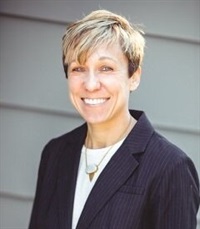
Dr. Catherine Barrett is a licensed Clinical Forensic Psychologist, based out of Los Angeles, California. She first gained clinical experience after graduating from University of Southern California in 2009, with a Masters degree in Marriage and Family Therapy. Through her training and experience, she has worked with marginalized communities, committed to social justice in mental health, and has developed a practice that is not only cross-culturally competent, but affirmative.
Clinical training and populations include addiction recovery, LGBTQ+, domestic and intimate partner violence, chronic mental illness, and narcissistic personality disorder. Dr. Barrett specializes in narcissistic abuse recovery.
Following a Masters degree in Marriage and Family Therapy, Dr. Barrett continued her commitment to social justice and psychology in the law by obtaining a doctorate of psychology in Clinical Forensic Psychology. She graduated from Alliant International University’s California School of Forensic Studies in 2014. A significant amount of her training was in risk assessment, evaluation, and treatment of sex offenders, sexually violent predators, mentally disordered offenders, and individuals found not guilty by reason of insanity. Dr. Barrett completed her Pre-Doctoral internship at the San Francisco Forensic Institute where she evaluated, treated, and ran psychological assessments on sex offenders and sexually violent predators. Dr. Barrett was first certified with the Sex Offender Management Board at this time.
Dr. Barrett has performed a variety of clinical and forensic assessments, including psycho-educational evaluations, risk assessment, and psychological evaluations for court. Dr. Barrett has been clinically trained and certified to administer the ABEL-Assessment of sexual interest and the STABLE-2007, which measures potential risk for future violence. She has also assisted Dr. Charles Flinton in administering the Penile Plethysmograph (PPG) to forensic hospital patients at Patton State Hospital in San Bernardino, California. Dr. Barrett has spent a significant amount of time providing group and individual therapy, as well as risk assessment to the sex offending population. Additionally, she has worked for Conditional Release Programs; such as , Gateways Forensic Hospital and MHM services. Dr. Barrett provided treatment, psychological evaluation, and risk assessment to those being offered conditional release due to either a mentally disordered offense or found not guilty by reason of insanity.
Dr. Barrett has experience testifying in court cases related to revocation of outpatient status to patients on conditional release, as well as expert and fact witnessing for both civil and criminal court. Dr. Barrett has served as an expert witness in the family court system, peer reviewing custodial evaluations, and testifying on the validity of such evaluations. Dr. Barrett serves as a psychotherapist to teens, young adults, and adults; primarily in the areas of emotional and sexual abuse victimization, LGBTQ+, and addiction. Dr. Barrett serves as part-time faculty for the University of Southern California where she teaches Law and Ethics, Child/Elder Abuse and Domestic Violence, Clinical Assessment, and serves as a field work supervisor.
Speaker Disclosures:
Financial: Dr. Catherine Barrett maintains a private practice and has an employment relationship with the University of Southern California. She receives a speaking honorarium and recording royalties from Psychotherapy Networker and PESI, Inc. She has no relevant financial relationships with ineligible organizations.
Non-financial: Dr. Catherine Barrett has no relevant non-financial rel
Additional Info
Program Information
Access Period for Live WebcastYou will have access for 90 days after the program for review. For live CE credit, you must watch the live webcast in its entirety at its scheduled time and complete the CE quiz and evaluation within one week. Please note that this requirement may vary by credit type. Please see detailed credit information for specific requirements for each credit type.
Webcast Schedule
Please note: There will be a 70-minute lunch and two 15-minute breaks; one in the morning and one in the afternoon. Lunch and break times will be announced by the speaker and at their discretion. A more detailed schedule is available upon request.
Questions?
Visit our FAQ page at https://www.pesicanada.ca/faq or contact us at https://www.pesicanada.ca/contact-us.
Objectives
- Identify the diagnostic implications of narcissism and antagonism as personality presentations.
- Summarize the key issues in managing clients experiencing narcissistic abuse/antagonistic relational stress (NA/ARS).
- Examine how the concepts of DARVO, blindness, trauma bonding, and cognitive dissonance drive self-blame in narcissistic/antagonistic relationships.
- Distinguish the role of attachment in establishing and maintaining narcissistic/antagonistic relational dynamics.
- Differentiate between how a client may be vulnerable to entering a narcissistic/antagonistic relationship versus keeping them stuck in the cycles of these relationships.
- Identify the behavioral, emotional, cognitive, physical/somatic, sequelae and responses to antagonistic behavior and patterns observed in narcissistic/antagonistic relationships.
- Contrast the overlaps between the fallout of NA/ARS and other major psychiatric disorders as well as the how these patterns may co-occur with NA/ARS.
- Summarize the key tenets of what it means to be “antagonism informed.”
- Select key elements of assessment when working with clients experiencing NA/ARS.
- Evaluate the risks of treating the fallout of NA/ARS as merely “co-dependency.”
- Analyze the concepts of radical acceptance, grief, guilt, shame, and pity in the therapeutic process with a client experiencing NA/ARS.
- Develop a treatment plan for a client experiencing NA/ARS.
- Identify legal and ethical issues that may have greater salience in working with clients experiencing narcissistic relationships.
- Examine the importance of cultural competency, structural awareness, contextualization, and intersectionality when working with clients experiencing antagonistic/narcissistic relationships.
Outline
DAY ONE
Morning:
- PRESENTATION OF A CASE
- An overview of narcissism beyond just DSM
- Understanding antagonism as a more comprehensive higher order trait
- The dangers of the NPD diagnosis
- How does narcissism develop?
- Relational motivations for narcissistic people
- Sub-types of narcissism
- Assessing narcissism
- Comorbidities and overlaps – how narcissism can magnify other clinical conditions
- Learning to Identify Narcissism by its Common Patterns
- Behaviors, thoughts, and emotions in narcissism
- Shame and vulnerability in narcissism
- Protective defenses and behaviors in narcissism
- Narcissistic behaviors and tactics in relationships (narcissistic abuse)
- Neurodivergence vs. other mental health issues vs. antagonism: A brief overview
- Why this knowledge is essential to being antagonism-informed
- Revisit the case and questions
Afternoon:
- PRESENTATION OF A CASE
- The dynamics of narcissistic/antagonistic relationships
- Intermittent reinforcement and inconsistency
- How the world views narcissistic people
- Cognitive dissonance and getting stuck
- The concept of “trauma bonding”
- The narcissistic relationship cycle
- The role of attachment, connection, and safety in narcissistic relationships
- DARVO
- The concept of betrayal blindness
- The responses of people in relationships with narcissistic people
- What do our clients have to do to stay safe and stay attached
- How diminished social power magnifies these responses
- Self-abandonment and related responses by clients in narcissistic relationships (disconnecting to connect)
- The fallout of narcissistic abuse
- REVISIT THE CASE and questions
DAY TWO
Morning:
- PRESENTATION OF A CASE
- An antagonism-informed approach to working with clients
- The key phases of NA/ARS treatment
- What does trauma-informed really mean?
- Creating the treatment map
- What other treatments miss when working with NA/ARS
- A multifaceted working model for treating NA/ARS
- Do I stay or do I go?: What to do when your client is stuck/ambivalent
- Best Practices for working with NA/ARS
- The fundamentals framework
- Fostering safety
- Primary areas of assessment
- Managing severe symptomology
- Preparing the client for psychoeducation (and avoiding the dark corners)
- Fostering radical acceptance
- Guiding our clients to agency, individuation, and autonomy
- Revisiting the case and questions
Afternoon:
- Case Simulation
- Experiencing the NA/ARS treatment framework in action
- Key principles to effective treatment
- Enhancing strengths and protective factors
- How to facilitate post-traumatic growth and resilience
- Distribution of cases, working in small groups and discussing the cases
- Building treatment plans, highlighting challenges and questions
- Using the cases to continue to practice implementing antagonism-informed approaches to working with clients experiencing relationships characterized by antagonistic and narcissistic behaviors and dynamics
- Questions
DAY THREE
- PRESENTATION OF A CASE
- The vital role of cultural, intersectional, and systematic awareness in treating NA/ARS
- A Social ecological model
- Structural issues in NA/ARS: Looking beyond the individual model
- The realities of mental health access
- The many contexts of client experiences
- Cultural competency
- Fostering humility and flexibility
- Accounting for power: Navigating the asymmetric therapeutic relationships
- Why therapy approaches cannot be easily moved between cultural groups
- The culturally competent counselor
- What is positionality?
- Navigating the legal and ethical challenges of working with NA/ARS
- Documentation and accessing records
- Working with collateral contacts: other clinicians, evaluators and more
- Navigating confidentiality and privilege
- Consultation: Getting support and protecting your client’s identity
- Tips for working with attorneys and the courts
- Malpractice insurance and how to best protect yourself
- Navigating mandated reporting using an ethical decision-making model
- Multicultural dynamics: understanding cultural diversity within the law
- Recognizing different types of coercive control and what to do to best support your clients
- Guidance from APA ethical codes: Competency, scope of practice, supervision and more
- The impact on therapists: Avoiding burnout, helplessness, and secondary trauma
- Navigating the ups and downs of your client’s readiness for change
- Guidance for providing testimony and treatment summaries
- Revisiting the case and questions
Target Audience
- Social Workers
- Counselors
- Psychologists
- Physicians
- Marriage and Family Therapists
- Addiction Counselors
- Psychotherapists
- Case Managers
- Nurses
- Mental Health Professionals
- Therapists
Reviews
Satisfaction Guarantee
Your satisfaction is our goal and our guarantee. Concerns should be addressed to info@pesicanada.com.
Please wait ...