

Not Found
Digital Seminar

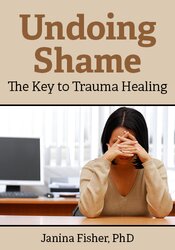
Undoing Shame

The Key to Trauma Healing

Speaker:
Janina Fisher, PhD
Duration:
1 Hour 55 Minutes
Language:
Presented in EN, subtitles in EN and FR, handouts in EN and FR
Copyright:
Mar 23, 2024
Product Code:
NOS096371
Media Type:
Digital Seminar


Description

More than any other obstacle, shame can block the joy and peace traumatized clients seek in therapy. Feelings of worthlessness prevent them from metabolizing positive experiences. Rather than seeing their accomplishments and strengths as accurate reflections of who they are, shame sabotages their progress. Paradoxically, as clients get better in treatment, standing up for themselves more and reaching their goals, these shifts can evoke other forms of shame, like self-doubt and self-judgement. In this workshop, you’ll explore. You’ll explore how to: 

  • Understand and accept the role of shame in surviving traumatic events 
  • Undo negative beliefs rooted in traumatic events that fuel feelings of inferiority and unworthiness 
  • Connect with and move through feelings of shame to make space for more pride and self-love 

Credit

Program Information

Planning Committee Disclosure - No relevant relationships

All members of the PESI, Inc. planning committee have provided disclosures of financial relationships with ineligible organizations and any relevant non-financial relationships prior to planning content for this activity. None of the committee members had relevant financial relationships with ineligible companies or other potentially biasing relationships to disclose to learners.  For speaker disclosures, please see the faculty biography.


Canada Credit - *

NOTE: Tuition includes one free CE Certificate (participant will be able to print the certificate of completion after passing the online post-test (80% passing score) and completing the evaluation). Instructional methods will include PowerPoint, didactic lecture, and others.

Continuing Education Information:  Listed below are the continuing education credit(s) currently available for this non-interactive self-study package. Program content is reviewed periodically per accrediting board rules for currency and appropriateness for credit. Credit approvals are subject to change. Please note, your licensing board dictates whether self-study is an acceptable form of continuing education, as well as which credit types are acceptable for continuing education hours. Please refer to your licensing board's rules and regulations. If your profession is not listed, please contact your licensing board to determine your continuing education requirements and check for reciprocal approval. 
For other credit inquiries not specified below, please contact info@pesi.com or 800-844-8260 before purchase.

Materials that are included in this course may include interventions and modalities that are beyond the authorized practice of your profession.  As a licensed professional, you are responsible for reviewing the scope of practice, including activities that are defined in law as beyond the boundaries of practice in accordance with and in compliance with your profession's standards.  

For Planning Committee disclosures, please see the statement above.  For speaker disclosures, please see the faculty biography.


Canada Credit - ---

Earn up to 1.75 CE hours. Please see below, for more details, as credit amounts vary by jurisdiction and profession. 


Canada Credit - Canadian Counsellors and Psychotherapists

PESI, Inc. is approved by the Canadian Counselling and Psychotherapy Association to offer continuing education for counsellors and psychotherapists. PESI, Inc. maintains responsibility for the program. This self-study activity is approved for 1.5 credit hours.


Canada Credit - Social Workers - National ASWB ACE

PESI, Inc., #1062, is approved as an ACE provider to offer social work continuing education by the Association of Social Work Boards (ASWB) Approved Continuing Education (ACE) program. Regulatory boards are the final authority on courses accepted for continuing education credit. ACE provider approval period: January 27, 2023 - January 27, 2026. Social workers completing this course receive 2.0 Clinical continuing education credits.


Course Level: Intermediate Format: Recorded asynchronous distance. Full attendance is required; no partial credits will be offered for partial attendance.


Canadian Social Workers: Canadian provinces may accept activities approved by the ASWB for ongoing professional development.


Canada Credit - Canadian Psychologists

PESI, Inc. is approved by the Canadian Psychological Association to offer continuing education for psychologists. PESI, Inc. maintains responsibility for the program. This program is approved for 1.5 self-study continuing education hours. Full credit statement at: www.pesi.com/cpa-statement


Canada Credit - Other Professions

This self-study activity qualifies for 1.75 continuing education clock hours as required by many national and local licensing boards and professional organizations. Save your activity advertisement and certificate of completion, and contact your own board or organization for specific requirements.


US National Boards - Addiction Counselors - NAADAC

This self-study course has been approved by PESI, Inc., as a NAADAC Approved Education Provider, for educational credits. NAADAC Provider #77553. PESI, Inc. is responsible for all aspects of their programming.

This self-study course offers 1.5 continuing education contact hours in the Counseling Services skill group. Full attendance is required; no partial credit will be awarded for partial attendance.


Handouts

Speaker

Janina Fisher, PhD's Profile

Janina Fisher, PhD Related seminars and products


Janina Fisher, PhD, is a licensed clinical psychologist and former instructor at The Trauma Center, a research and treatment center founded by Bessel van der Kolk. Known as an expert on the treatment of trauma, Dr. Fisher has also been treating individuals, couples, and families since 1980.

She is the past president of the New England Society for the Treatment of Trauma and Dissociation, an EMDR International Association Credit Provider, Assistant Educational Director of the Sensorimotor Psychotherapy Institute, and a former Instructor, Harvard Medical School. Dr. Fisher lectures and teaches nationally and internationally on topics related to the integration of the neurobiological research and newer trauma treatment paradigms into traditional therapeutic modalities.

She is co-author with Pat Ogden of Sensorimotor Psychotherapy: Interventions for Attachment and Trauma (2015) and author of Healing the Fragmented Selves of Trauma Survivors: Overcoming Internal Self-Alienation (2017) and the forthcoming book, Working with the Neurobiological Legacy of Trauma (in press).

Speaker Disclosures:
Financial: Dr. Janina Fisher is an international expert and consultant on Trauma and Dissociation. She is a consultant for Khiron House Clinics and the Massachusetts Department of MH Restraint and Seclusion Initiative. Dr. Fisher receives royalties as a published author. She receives a speaking honorarium, recording royalties and book royalties from Psychotherapy Networker and PESI, Inc. Dr. Fisher has no relevant financial relationships with ineligible organizations.
Non-financial: Dr. Janina Fisher is on the advisory board for the Trauma Research Foundation. She is a patron of the Bowlby Center.


Additional Info

Program Information

Access for Self-Study (Non-Interactive)

Access never expires for this product.

For a more detailed outline that includes times or durations of time, if needed, please contact cepesi@pesi.com.


Questions?

Visit our FAQ page at https://www.pesicanada.ca/faq or contact us at https://www.pesicanada.ca/contact-us.


Objectives

  • Summarize the role of shame and self-loathing as symptoms of trauma. 
  • Identify the neurobiological effects of shame. 
  • Discriminate the physiological and cognitive contributors to chronic shame. 
  • Describe the survival advantages of shame. 

Outline

The Role of Shame in Traumatized Individuals 

  • How shame supports the dorsal vagal or submission response 
  • Procedural learning of survival responses 
  • How shame can be adaptive in a dangerous environment 

The Neurobiological Effects of Shame 

  • Flushing, gaze aversion, collapse, loss of speech 
  • How somatic symptoms of shame become belief systems 

Survival “Advantages” of Shame 

  • Inhibiting behavior that might elicit abuse 
  • How shame supports loyalty to family over self 
  • Shame as a non-threatening response to perpetrators 

Interventions for Addressing Shame 

  • Developing a mindful relationship to the shame as implicit memory 
  • Cognitive re-structuring of shame as a survival response 
  • Treating the shame as a child part humiliated by an inner critic 

Limitations of the research and potential risks 

  • Evaluating risk in use of mindfulness-based or cognitive restructuring techniques 
  • Identifying clients appropriate or inappropriate for these approaches 


Target Audience

  • Psychologists
  • Physicians
  • Nurses
  • Counselors
  • Marriage and Family Therapists
  • Addiction Counselors
  • Social Workers

Reviews

5
4
3
2
1

Overall:      4.8

Total Reviews: 583

Satisfaction Guarantee
Your satisfaction is our goal and our guarantee. Concerns should be addressed to info@pesicanada.com.

Please wait ...

Back to Top