


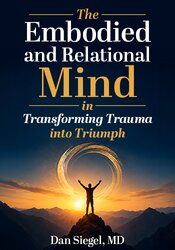
The Embodied and Relational Mind in Transforming Trauma into Triumph
- Speaker:
- Daniel J. Siegel, MD
- Duration:
- 1 Hour 07 Minutes
- Language:
- Presented in EN, subtitles in EN and FR, handouts in EN and FR
- Copyright:
-
May 12, 2026
- Product Code:
- POS150778
- Media Type:
- Digital Seminar

Description
In this session, Dan Siegel will present a clinically grounded framework for understanding trauma by first distinguishing the mind from the brain. Building on that distinction, you will examine how trauma disrupts integration in both embodied and relational experience. Using the Interpersonal Neurobiology (IPNB) lens, Dan will frame healing as restoring integration to support regulation, resilience, and post-traumatic growth.
When integration is impaired, experience becomes organized around chaos and rigidity—core features of post-traumatic stress. In this session, you will dive into how healing involves restoring differentiation and linkage in the body and in relationships.
You’ll learn how to:
- Describe how the mind is distinct from the brain
- Identify the key features of impaired integration
- Name the five aspects of integrative flow
Credit
Speaker
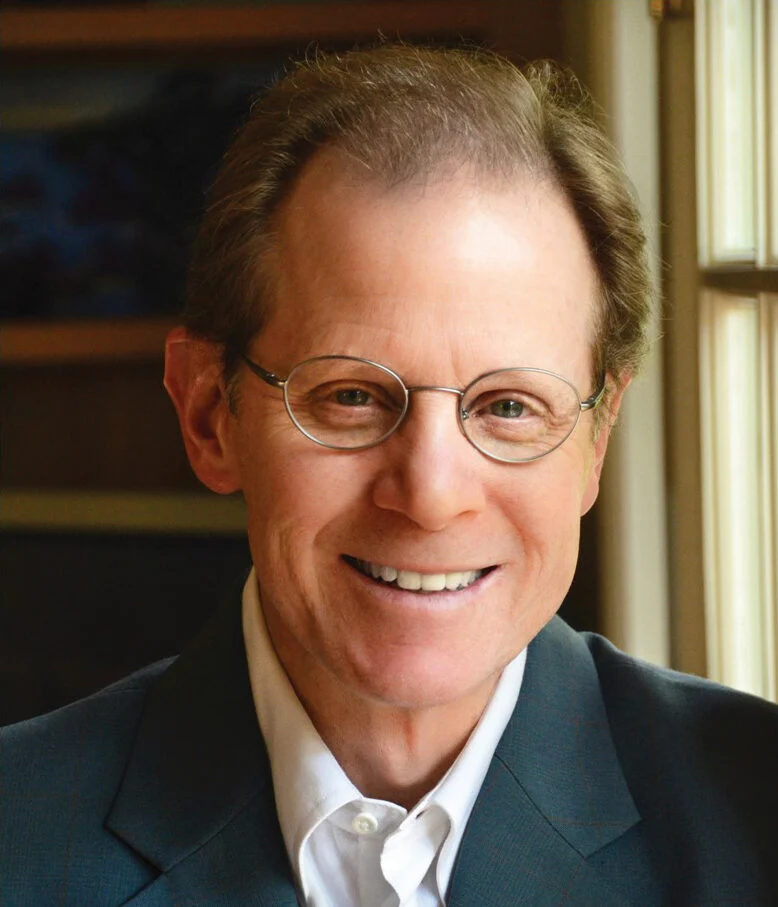
Daniel J. Siegel, MD Related seminars and products
Mind Your Brain, Inc.
Dr. Dan Siegel is the founder and director of education of the Mindsight Institute and founding co-director of the Mindful Awareness Research Center at UCLA, where he was also co-principal investigator of the Center for Culture, Brain and Development and clinical professor of psychiatry at The School of Medicine.
An award-winning educator, Dan is the author of five New York Times bestsellers and over fifteen other books which have been translated into over forty languages. As the founding editor of the Norton Professional Series on Interpersonal Neurobiology (“IPNB”), Dan has overseen the publication of over one hundred books in the transdisciplinary IPNB frame which focuses on the mind and mental health.
A graduate of Harvard Medical School, Dan completed his postgraduate training at UCLA specializing in pediatrics, and adult, adolescent, and child psychiatry. He was trained in attachment research and narrative analysis through a National Institute of Mental Health research training fellowship focusing on how relationships shape our autobiographical ways of making sense of our lives and influence our development across the lifespan.
Speaker Disclosures
Financial: Dr. Dan Siegel serves as the Medical Director at the Lifespan Learning Institute and is the Co-Founder and Director of Education at the Mindsight Institute. He is also the founding editor of the Norton Series on Interpersonal Neurobiology. Dr. Siegel receives royalties as a published author and serves as a scientific advisor for the Inner Development Goals initiative and as an advisor for the Center for Child Well-Being. Additionally, he receives honoraria and recording royalties from Psychotherapy Networker and PESI, Inc. Dr. Siegel has no relevant financial relationships with ineligible organizations.
Non-financial: Dr. Dan Siegel is an honorary member of the Austrian Federal Association for Mindfulness. He also serves on the Board of the Garrison Institute and as an advisory board member for both Gloo and Convergence.


Additional Info
Program Information
Access for Self-Study (Non-Interactive)Access never expires for this product.
Questions?
Visit our FAQ page at https://www.pesicanada.ca/faq or contact us at https://www.pesicanada.ca/contact-us.
Additional CE Info
For a more detailed outline that includes times or durations of time, if needed, please contact cepesi@pesi.com.
Objectives
Participants will be able to:
- Explain at least three IPNB‑based distinctions between the mind and the brain
- Identify and define at least four features of impaired integration
- Name the five aspects of integrative flow
Outline
The Embodied and Relational Mind
- Seeing beyond reductionistic views of mind as “brain activity
- Placing both the soma and the relational at the heart of healing
- Limitations of the research and potential risks
Trauma as Impairment of Integration
- Defining integration as the linkage of differentiated parts
- Impaired integration is both relational and somatic
- Reveals itself as chaos and rigidity
Healing is Integration in both Body and Relationships
Cultivating differentiation
Establishing linkages
Post Traumatic Growth in Body and Relationships
- Interoception and Inner regulation
- Mindsight and Inter regulation
- Finding the MWe in the differentiated and linked Me and We
Target Audience
- Counselors
- Social Workers
- Marriage & Family Therapists
- Psychologists
- Psychiatrists
- Psychotherapists
- Other Mental Health Professionals
Reviews
Satisfaction Guarantee
Your satisfaction is our goal and our guarantee. Concerns should be addressed to info@pesicanada.com.
Please wait ...