
Anxiety levels are increasing individually and collectively in modern day. Faced with uncertainty, an overabundance of information (and misinformation), among other challenges, our minds struggle to keep up. Our brains default to old survival mechanism to help us deal with anxiety, which can lead to the development of unhealthy coping habits (e.g. stress eating) and ironically feed anxiety as a habit itself. Drawing on his clinical work, neuroscience research studies and development of next-generation digital therapeutics for habit change, Dr. Brewer will discuss the underlying behavioral and neurobiological mechanisms of why anxiety and other habits are formed and how we can paradoxically tap into these very processes to uproot them. He will also discuss how we can apply these insights to improving clinical treatments and to our own lives.
NOTE: Tuition includes one free CE Certificate (participant will be able to print the certificate of completion after passing the online post-test (80% passing score) and completing the evaluation). Instructional methods will include PowerPoint, didactic lecture, and others.
Continuing Education Information: Listed below are the continuing education credit(s) currently available for this non-interactive self-study package. Program content is reviewed periodically per accrediting board rules for currency and appropriateness for credit. Credit approvals are subject to change. Please note, your licensing board dictates whether self-study is an acceptable form of continuing education, as well as which credit types are acceptable for continuing education hours. Please refer to your licensing board's rules and regulations. If your profession is not listed, please contact your licensing board to determine your continuing education requirements and check for reciprocal approval.
For other credit inquiries not specified below, please contact info@pesi.com or 800-844-8260 before purchase.
Materials that are included in this course may include interventions and modalities that are beyond the authorized practice of your profession. As a licensed professional, you are responsible for reviewing the scope of practice, including activities that are defined in law as beyond the boundaries of practice in accordance with and in compliance with your profession's standards.
For Planning Committee disclosures, please see the statement above. For speaker disclosures, please see the faculty biography.
Earn up to 1.25 CE hours. Please see below, for more details, as credit amounts vary by jurisdiction and profession.
PESI, Inc. is approved by the Canadian Counselling and Psychotherapy Association to offer continuing education for counsellors and psychotherapists. PESI, Inc. maintains responsibility for the program. This self-study activity is approved for 1.0 credit hours.

PESI, Inc., #1062, is approved as an ACE provider to offer social work continuing education by the Association of Social Work Boards (ASWB) Approved Continuing Education (ACE) program. Regulatory boards are the final authority on courses accepted for continuing education credit. ACE provider approval period: January 27, 2023 - January 27, 2026. Social workers completing this course receive 1.25 Clinical continuing education credits.
Course Level: Intermediate Format: Recorded asynchronous distance. Full attendance is required; no partial credits will be offered for partial attendance.
Canadian Social Workers: Canadian provinces may accept activities approved by the ASWB for ongoing professional development.
PESI, Inc. is approved by the Canadian Psychological Association to offer continuing education for psychologists. PESI, Inc. maintains responsibility for the program. This program is approved for 1.0 self-study continuing education hours. Full credit statement at: www.pesi.com/cpa-statement
This self-study activity qualifies for 1.25 continuing education clock hours as required by many national and local licensing boards and professional organizations. Save your activity advertisement and certificate of completion, and contact your own board or organization for specific requirements.
| File type | File name | Number of pages | |
|---|---|---|---|
| Transcript (142.8 KB) | 23 Pages | Available after Purchase | |
| Transcript - French (142.8 KB) | 23 Pages | Available after Purchase | |
| Transcript - Italian (142.8 KB) | 23 Pages | Available after Purchase |
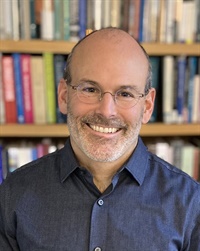
Jud Brewer, MD, PhD (“Dr. Jud”) is a New York Times best-selling author and thought leader in the field of habit change and the “science of self-mastery,” who blends over 20 years of experience with mindfulness training and a career in scientific research. He is passionate about understanding how our brains work, and how to use that knowledge to help people make deep, permanent change in their lives – with the goal of reducing suffering in the world at large.
Dr. Brewer is the director of research and innovation at Brown University’s Mindfulness Center, where he also serves as an associate professor at the Schools of Public Health and Medicine at Brown University. Additionally, he is the chief medical officer at Sharecare, a digital health company, and a research affiliate at MIT.
As a psychiatrist and internationally known expert in mindfulness training for treating addictions, Dr. Brewer has developed and tested novel mindfulness programs for habit change, including both in-person and app-based treatments for anxiety, emotional eating, and smoking. Based on the success of these programs in the lab, he co-founded MindSciences, Inc. – acquired by Sharecare in 2020 – to create app-based digital therapeutic versions of these programs for a wider audience, working with individuals, corporations, and health systems to put effective, evidence-based behavior change guidance in the hands of people struggling with unwanted behaviors and “everyday addictions.”
Dr. Brewer has published numerous peer-reviewed studies, trained U.S. Olympic athletes and coaches, foreign government ministers and corporate leaders. His research has been funded by the National Institutes of Health and American Heart Association, among others.
He is the author of The Craving Mind: From Cigarettes to Smartphones to Love, Why We Get Hooked and How We Can Break Bad Habits (New Haven: Yale University Press, 2017) and Unwinding Anxiety: New Science Shows How to Break the Cycles of Worry and Fear to Heal Your Mind (Avery/Penguin Random House, 2021).
Speaker Disclosures:
Access never expires for this product.
For a more detailed outline that includes times or durations of time, if needed, please contact cepesi@pesi.com.
Visit our FAQ page at https://www.pesicanada.com/faq or contact us at https://www.pesicanada.com/contact-us
Satisfaction Guarantee
Your satisfaction is our goal and our guarantee. Concerns should be addressed to info@pesicanada.com.
Please wait ...