

Join IFS and world-renowned trauma treatment expert, Dr. Frank Anderson MD, as he guides you on the effective use of IFS to help your clients overcome trauma and achieve lasting health.
After completing this training, you will:
Don't miss this opportunity to learn from Dr. Frank Anderson and enhance your skills in trauma treatment with IFS. Enroll in our training program and become a more effective and confident therapist – making a world of difference in your patients’ lives.
All members of the PESI, Inc. planning committee have provided disclosures of financial relationships with ineligible organizations and any relevant non-financial relationships prior to planning content for this activity. None of the committee members had relevant financial relationships with ineligible companies or other potentially biasing relationships to disclose to learners. For speaker disclosures, please see the faculty biography.
NOTE: Each purchase includes CE credit for one individual (participants in full attendance will be able to print the certificate of completion after passing the online post-test (80% passing score) and completing the evaluation). Instructional methods will include PowerPoint, didactic lecture, Q&A, and others.
Continuing Education Information: Credits listed below are for full attendance at the live, interactive webinar only. This webinar is being broadcast live in real-time and must be attended live, in its entirety, in order to earn credit. You will be able to type questions to the speaker. The speaker will see the questions and address them during the presentation as time allows. Please note, your licensing board dictates whether web-based activities are an acceptable form of continuing education, as well as which credit types are acceptable for continuing education hours. Please refer to your licensing board's rules and regulations. If your profession is not listed, please contact your licensing board to determine your continuing education requirements and check for reciprocal approval. For other credit inquiries not specified below, please contact info@pesi.com or 800-844-8260 before the event.
Materials that are included in this course may include interventions and modalities that are beyond the authorized practice of your profession. As a licensed professional, you are responsible for reviewing the scope of practice, including activities that are defined in law as beyond the boundaries of practice in accordance with and in compliance with your profession's standards.
For Planning Committee disclosures, please see the statement above. For speaker disclosures, please see the faculty biography.
Earn up to 12.5 CE hours. Please see below, for more details, as credit amounts vary by jurisdiction and profession.
PESI, Inc. is approved by the Canadian Counselling and Psychotherapy Association to offer continuing education for counsellors and psychotherapists. PESI, Inc. maintains responsibility for the program. This activity is approved for 12.5 credit hours.
PESI, Inc. is approved by the Canadian Psychological Association to offer continuing education for psychologists. PESI, Inc. maintains responsibility for the program. This program is approved for 12.5 continuing education hours. Full credit statement at: www.pesi.com/cpa-statement
This activity qualifies for 760 continuing education minutes as required by many national and local licensing boards and professional organizations. Save your activity advertisement and certificate of completion, and contact your own board or organization for specific requirements.

PESI, Inc., #1062, is approved as an ACE provider to offer social work continuing education by the Association of Social Work Boards (ASWB) Approved Continuing Education (ACE) program. Regulatory boards are the final authority on courses accepted for continuing education credit. ACE provider approval period: January 27, 2023 - January 27, 2026. Social workers completing this course receive 12.75 Clinical continuing education credits.
Course Level: Intermediate Format: Synchronous distance. Full attendance is required; no partial credits will be offered for partial attendance.
Canadian Social Workers: Canadian provinces may accept activities approved by the ASWB for ongoing professional development.
| File type | File name | Number of pages | |
|---|---|---|---|
| Manual - 2-Day Intensive Workshop: Treating Complex Trauma with Internal Family Systems (IFS) Therapy (4.6 MB) | 58 Pages | Available after Purchase | |
| Transcript - Transcending Trauma Day 1 - AM (234.9 KB) | 40 Pages | Available after Purchase | |
| Transcript - Transcending Trauma Day 1 - PM (219.5 KB) | 48 Pages | Available after Purchase | |
| Transcript - Transcending Trauma Day 2 - AM (236.5 KB) | 37 Pages | Available after Purchase | |
| Transcript - Transcending Trauma Day 2 - PM (211.8 KB) | 45 Pages | Available after Purchase | |
| Manual - 2-Day Intensive Workshop: Treating Complex Trauma with Internal Family Systems (IFS) Therapy - French (4.6 MB) | 58 Pages | Available after Purchase | |
| Manual - 2-Day Intensive Workshop: Treating Complex Trauma with Internal Family Systems (IFS) Therapy - Italian (4.6 MB) | 58 Pages | Available after Purchase | |
| Manual - 2-Day Intensive Workshop: Treating Complex Trauma with Internal Family Systems (IFS) Therapy - German (4.6 MB) | 58 Pages | Available after Purchase | |
| Manual - 2-Day Intensive Workshop: Treating Complex Trauma with Internal Family Systems (IFS) Therapy - Spanish (4.6 MB) | 58 Pages | Available after Purchase |
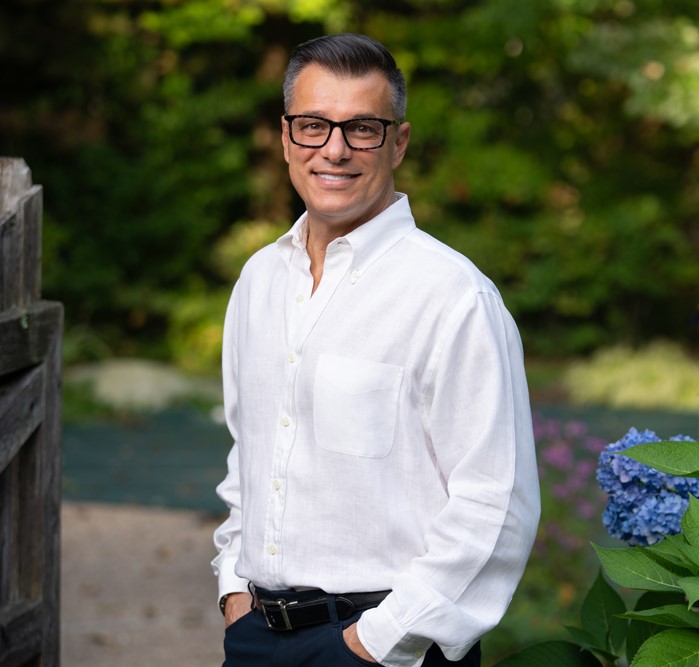
Frank Anderson, MD, completed his residency and was a clinical instructor in psychiatry at Harvard Medical School. He is both a psychiatrist and psychotherapist. He specializes in the treatment of trauma and dissociation and is passionate about teaching brain-based psychotherapy and integrating current neuroscience knowledge with the IFS model of therapy.
Dr. Anderson has lectured extensively on the Neurobiology of PTSD and Dissociation and wrote the chapter “Who’s Taking What” Connecting Neuroscience, Psychopharmacology and Internal Family Systems for Trauma in Internal Family Systems Therapy – New Dimensions. He co-authored a chapter on What IFS Brings to Trauma Treatment in Innovations and Elaborations in Internal Family Systems Therapy, and recently co-authored Internal Family Systems Skills Training Manual.
His most recent book, entitled Transcending Trauma: Healing Complex PTSD with Internal Family Systems was released on May 19, 2021.
His memoir, To Be Loved, was released on May 7, 2024.
Speaker Disclosures:
Financial: Dr. Frank Anderson maintains a private practice, is the co-founder of the Trauma Institute, and is the co-founding producer of Trauma Informed Media. He receives royalties as a published author. He receives a speaking honorarium, recording, and book royalties from PESI, Inc. He has no relevant financial relationships with ineligible organizations.
Non-financial: Dr. Frank Anderson is a member of the New England Society Studying Trauma and Dissociation and the International Society for the Study of Trauma and Dissociation.
Visit our FAQ page at www.pesi.com/faq or contact us at www.pesi.com/info
IFS and Trauma Treatment
Working with Various Types of Trauma
The IFS Technique: How to Work with Protective Parts
Getting Started with IFS in Your Practice
The Neuroscience of Trauma and Dissociation
What You Need to Know as a Therapist
Attachment, Relational Trauma and Common Reactions
The Role of IFS in Treating Attachment and Relational Wounds
The Associated Features of Trauma
Master the key factors in a Trauma Treatment System
Working with Dissociation, The Self & Parts
Stay on Target Using IFS with the Most Extreme Parts
The Process of Transcending Trauma
Self as the Ultimate Corrective Experience
Satisfaction Guarantee
Your satisfaction is our goal and our guarantee. Concerns should be addressed to info@pesicanada.com.
Please wait ...