


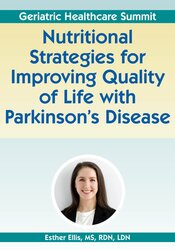
Nutritional Strategies for Improving Quality of Life with Parkinson's Disease
- Speaker:
- Esther L Ellis, MS, RDN, LDN
- Duration:
- 2 Hours 24 Minutes
- Language:
- Presented in EN, subtitles in EN and FR, handouts in EN and FR
- Copyright:
-
Aug 19, 2022
- Product Code:
- POS078470
- Media Type:
- Digital Seminar

Description
Esther Ellis, MS, RDN, LDN, is a writer and registered dietitian nutritionist. She will review the role of nutrition in improving quality of life for people living with Parkinson’s Disease. Attendees will gain a better understanding of nutrition strategies for symptom management and how proper nutrition, especially preventing or treating malnutrition, can lead to better patient outcomes. Learn what and how commonly prescribed medications can impact nutrition status and nutrition strategies for increasing efficacy.
Credit
Speaker

Esther L Ellis, MS, RDN, LDN Related seminars and products
Esther Ellis, MS, RDN, LDN, is a registered dietician, nutritionist, and writer. In her virtual private practice, Esther specializes in palliative nutrition, helping people living with serious illness, including neurodegenerative disorders, plus families and caregivers. She helps her clients improve their quality of life and manage their symptoms through nutrition and lifestyle choices.
Speaker Disclosures:
Financial: Esther Ellis maintains a private practice and has employment relationships with Duke University Health System and the Academy of Nutrition and Dietetics. She receives a speaking honorarium and recording royalties from PESI, Inc. She has no relevant financial relationships with ineligible organizations.
Non-financial: Esther Ellis has no relevant non-financial relationships.
Additional Info
Program Information
Access for Self-Study (Non-Interactive)Access never expires for this product.
Questions?
Visit our FAQ page at https://www.pesicanada.ca/faq or contact us at https://www.pesicanada.ca/contact-us.
Objectives
- Recognize risk factors for malnutrition specific to people with Parkinson’s Disease.
- Describe nutrition strategies for management of common symptoms.
- List often seen vitamin and mineral deficiencies and understand the importance of screening.
- Summarize ways in which medications and PD treatments can be impacted by nutrition and vice versa.
- Address changing nutritional needs throughout the disease process
Outline
Malnutrition- Importance of preventing malnutrition for better patient outcomes
- Changing dietary needs
- Risk factors for people with PD
- Tips for prevention and treatment
- Constipation
- Diarrhea
- Gastroparesis
- Nausea and vomiting
- Changes to taste and smell
- Reflux
- Low blood pressure/orthostatic hypotension
- Bone mineral density and osteoporosis
- Common (and often missed) vitamin deficiencies that contribute
- Nutrition and lifestyle strategies
- Working with healthcare team
- The role of artificial nutrition support
- Common medications and potential diet-related side effects
- Protein timing to improve efficacy of Levodopa
Target Audience
- Nurses
- Nurse Practitioners
- Physician Assistants
- Physical Therapists
- Occupational Therapists
- Speech-Language Pathologists
- Pharmacists
Reviews
Satisfaction Guarantee
Your satisfaction is our goal and our guarantee. Concerns should be addressed to info@pesicanada.com.
Please wait ...