

Integrating IFS and Polyvagal Theory
Techniques for Anchoring Client’s in Embodied Safety and Co-regulation Strategies
- Speaker:
- Alexia Rothman, PhD
- Duration:
- 1 Hour 03 Minutes
- Language:
- Presented in EN, handouts in EN and FR
- Copyright:
-
Feb 19, 2026
- Product Code:
- POS150599
- Media Type:
- Digital Seminar
Description
Our autonomic nervous systems and our protective parts share a common goal: to keep us safe. In this workshop led by expert Dr. Alexia Rothman, you’ll explore how Internal Family Systems (IFS) therapy and Polyvagal theory can work together to help clients and therapists stay anchored in embodied safety as therapeutic work deepens. You’ll get:
- IFS therapy techniques to partner with clients’ protectors around safety and regulation
- Strategies for anchoring clients in states of regulation as vulnerable material emerges
- Co-regulation and healing practices using your own embodied Self-presence
- Guided reflection and video demonstrations of polyvagal-informed IFS therapy
This event is not endorsed by, sponsored by, or affiliated with the IFS Institute and does not qualify for IFS Institute credits or certification.
Credit
Program Information
Planning Committee Disclosure - No relevant relationshipsAll members of the PESI, Inc. planning committee have provided disclosures of financial relationships with ineligible organizations and any relevant non-financial relationships prior to planning content for this activity. None of the committee members had relevant financial relationships with ineligible companies or other potentially biasing relationships to disclose to learners. For speaker disclosures, please see the faculty biography.
NOTE: Tuition includes one free CE Certificate (participant will be able to print the certificate of completion after passing the online post-test (80% passing score) and completing the evaluation). Instructional methods will include PowerPoint, didactic lecture, and others.
Continuing Education Information: Listed below are the continuing education credit(s) currently available for this non-interactive self-study package. Program content is reviewed periodically per accrediting board rules for currency and appropriateness for credit. Credit approvals are subject to change. Please note, your licensing board dictates whether self-study is an acceptable form of continuing education, as well as which credit types are acceptable for continuing education hours. Please refer to your licensing board's rules and regulations. If your profession is not listed, please contact your licensing board to determine your continuing education requirements and check for reciprocal approval.
For other credit inquiries not specified below, please contact info@pesi.com or 800-844-8260 before purchase.
Materials that are included in this course may include interventions and modalities that are beyond the authorized practice of your profession. As a licensed professional, you are responsible for reviewing the scope of practice, including activities that are defined in law as beyond the boundaries of practice in accordance with and in compliance with your profession's standards.
For Planning Committee disclosures, please see the statement above. For speaker disclosures, please see the faculty biography.
Earn up to 1.0 CE hours. Please see below, for more details, as credit amounts vary by jurisdiction and profession.
PESI, Inc. is approved by the Canadian Counselling and Psychotherapy Association to offer continuing education for counsellors and psychotherapists. PESI, Inc. maintains responsibility for the program. This self-study activity is approved for 1.0 credit hours.

PESI, Inc., #1062, is approved as an ACE provider to offer social work continuing education by the Association of Social Work Boards (ASWB) Approved Continuing Education (ACE) program. Regulatory boards are the final authority on courses accepted for continuing education credit. ACE provider approval period: January 27, 2026 - January 27, 2029. Social workers completing this course receive 1.0 Clinical continuing education credits.
Course Level: Intermediate Format: Recorded asynchronous distance. Full attendance is required; no partial credits will be offered for partial attendance.
Canadian Social Workers: Canadian provinces may accept activities offered by providers approved by the ASWB ACE program for ongoing professional development.
This self-study activity qualifies for 1.0 continuing education clock hours as required by many national and local licensing boards and professional organizations. Save your activity advertisement and certificate of completion, and contact your own board or organization for specific requirements.
Handouts
| File type | File name | Number of pages | |
|---|---|---|---|
| Manual - Integrating IFS and Polyvagal Theory (1.7 MB) | 16 Pages | Available after Purchase | |
| Transcript - Integrating IFS & Polyvagal Theory (48.4 KB) | 7 Pages | Available after Purchase | |
| Manual - Integrating IFS and Polyvagal Theory - French (1.7 MB) | 16 Pages | Available after Purchase | |
| Transcript - Integrating IFS & Polyvagal Theory - French (48.4 KB) | 7 Pages | Available after Purchase | |
| Manual - Integrating IFS and Polyvagal Theory - Italian (1.7 MB) | 16 Pages | Available after Purchase | |
| Transcript - Integrating IFS & Polyvagal Theory - Italian (48.4 KB) | 7 Pages | Available after Purchase | |
| Manual - Integrating IFS and Polyvagal Theory - German (1.7 MB) | 16 Pages | Available after Purchase | |
| Transcript - Integrating IFS & Polyvagal Theory - German (48.4 KB) | 7 Pages | Available after Purchase | |
| Manual - Integrating IFS and Polyvagal Theory - Spanish (1.7 MB) | 16 Pages | Available after Purchase | |
| Transcript - Integrating IFS & Polyvagal Theory - Spanish (48.4 KB) | 7 Pages | Available after Purchase |
Speaker
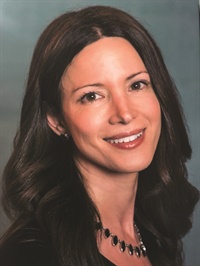
Alexia Rothman, PhD Related seminars and products
Dr. Alexia Rothman is a clinical psychologist in private practice in Atlanta, GA, since 2004. She is a lead trainer for the IFS Institute, a Certified Internal Family Systems therapist, an international speaker and educator on the IFS model, and an IFSI-approved professional consultant. Dr. Rothman offers workshops and retreats on the IFS model throughout the U.S. and internationally. She co-hosts the IFS-based podcasts IFS Talks and Conversas IFS and has published a book chapter on the integration of IFS and Polyvagal Theory.
Dr. Rothman is a United States Presidential Scholar who graduated summa cum laude from Emory University as a Robert W. Woodruff Scholar. She received her PhD in clinical psychology from the University of California, Los Angeles (UCLA), where she was an Edwin W. Pauley Fellow and a National Science Foundation Graduate Research Fellow. She has held adjunct faculty positions at Emory University and Agnes Scott College.
Speaker Disclosures:
Financial: Dr. Alexia Rothman maintains a private practice. She is co-host of the podcasts Conversas IFS and Explorations in Psychotherapy. She is a paid trainer with the IFS Institute, and she receives a speaking honorarium and recording royalties from PESI, Inc. Dr. Rothman receives compensation as a consultant. She has no relevant financial relationships with ineligible organizations.
Non-financial: Dr. Alexia Rothman is a member of the American Psychological Association, the Georgia Psychological Association, and the National Register of Health Service Psychologists.
Additional Info
Program Information
Access for Self-Study (Non-Interactive)Access never expires for this product.
For a more detailed outline that includes times or durations of time, if needed, please contact cepepesi.com
Questions?
Visit our FAQ page at https://www.pesicanada.ca/faq or contact us at https://www.pesicanada.ca/contact-us.
Please Note
This product is not endorsed by, sponsored by, or affiliated with the IFS Institute and does not qualify for IFS Institute credits or certification.
Objectives
- Explain how IFS concepts and techniques align with the principles of Polyvagal Theory.
- Recognize how protective parts in the internal system can be associated with shifts in autonomic state.
- Learn to interpret resistance in therapy through an IFS and polyvagal lens.
- Apply polyvagal-informed IFS interventions that support nervous system regulation and a felt sense of safety in the therapeutic relationship.
- Partner with protectors to support regulation, trust, and flow in the therapeutic process.
- Integrate awareness of your own nervous system states to maintain Self-presence and co-regulation during sessions, allowing your client to experience being safely witnessed.
Outline
- Aligning IFS therapy concepts and practices with Polyvagal Theory
- Polyvagal-informed IFS interventions for nervous system regulation
Target Audience
- Counselors
- Social Workers
- Psychologists
- Psychiatrists
- Addiction Counselors
- Nurses
- Marriage and Family Therapists
- Other Mental Health Professionals
Reviews
Satisfaction Guarantee
Your satisfaction is our goal and our guarantee. Concerns should be addressed to info@pesicanada.com.
Please wait ...