

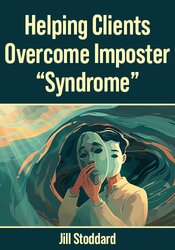
Helping Clients Overcome Imposter "Syndrome"
- Speaker:
- Jill Stoddard, PhD
- Duration:
- 2 Hours
- Language:
- Presented in EN, subtitles in EN and FR, handouts in EN and FR
- Copyright:
-
Mar 21, 2025
- Product Code:
- NOS096463
- Media Type:
- Digital Seminar
Description
Deep down, the majority of successful people spend a good amount of time questioning their professional legitimacy. The result can be debilitating self-doubt and rumination, affecting everything from their work to their relationships. You might even be one of these self-doubters! So how can we help people break free of this so-called imposter “syndrome”? In this workshop, learn Acceptance and Commitment Therapy (ACT) techniques to help clients manage their imposterism and live up to their full professional potential—without being usurped by the crippling burden of self-doubt. You’ll explore why your clients (and you!) develop imposter thoughts, fall into traps trying to outrun the imposter experience, and how to take actionable steps toward cultivating psychological flexibility—the main goal of ACT---to move confidently in the direction of your most deeply held values. You’ll also learn:
- Which people are most vulnerable to the imposter experience—and why
- The five imposter subtypes—and how to work with them in the therapy room
- ACT metaphors and experiential exercises to bring your work to life for clients
Credit
Program Information
Planning Committee Disclosure - No relevant relationshipsAll members of the PESI, Inc. planning committee have provided disclosures of financial relationships with ineligible organizations and any relevant non-financial relationships prior to planning content for this activity. None of the committee members had relevant financial relationships with ineligible companies or other potentially biasing relationships to disclose to learners. For speaker disclosures, please see the faculty biography.
NOTE: Tuition includes one free CE Certificate (participant will be able to print the certificate of completion after passing the online post-test (80% passing score) and completing the evaluation). Instructional methods will include PowerPoint, didactic lecture, and others.
Continuing Education Information: Listed below are the continuing education credit(s) currently available for this non-interactive self-study package. Program content is reviewed periodically per accrediting board rules for currency and appropriateness for credit. Credit approvals are subject to change. Please note, your licensing board dictates whether self-study is an acceptable form of continuing education, as well as which credit types are acceptable for continuing education hours. Please refer to your licensing board's rules and regulations. If your profession is not listed, please contact your licensing board to determine your continuing education requirements and check for reciprocal approval.
For other credit inquiries not specified below, please contact info@pesi.com or 800-844-8260 before purchase.
Materials that are included in this course may include interventions and modalities that are beyond the authorized practice of your profession. As a licensed professional, you are responsible for reviewing the scope of practice, including activities that are defined in law as beyond the boundaries of practice in accordance with and in compliance with your profession's standards.
For Planning Committee disclosures, please see the statement above. For speaker disclosures, please see the faculty biography.
Earn up to 2.0 CE hours. Please see below, for more details, as credit amounts vary by jurisdiction and profession.
PESI, Inc. is approved by the Canadian Counselling and Psychotherapy Association to offer continuing education for counsellors and psychotherapists. PESI, Inc. maintains responsibility for the program. This self-study activity is approved for 2.0 credit hours.
PESI, Inc. is approved by the Canadian Psychological Association to offer continuing education for psychologists. PESI, Inc. maintains responsibility for the program. This program is approved for 2.0 self-study continuing education hours. Full credit statement at: www.pesi.com/cpa-statement

PESI, Inc., #1062, is approved as an ACE provider to offer social work continuing education by the Association of Social Work Boards (ASWB) Approved Continuing Education (ACE) program. Regulatory boards are the final authority on courses accepted for continuing education credit. ACE provider approval period: January 27, 2026 - January 27, 2029. Social workers completing this course receive 2.0 Clinical continuing education credits.
Course Level: Intermediate Format: Recorded asynchronous distance. Full attendance is required; no partial credits will be offered for partial attendance.
Canadian Social Workers: Canadian provinces may accept activities offered by providers approved by the ASWB ACE program for ongoing professional development.
This self-study activity qualifies for 2.0 continuing education clock hours as required by many national and local licensing boards and professional organizations. Save your activity advertisement and certificate of completion, and contact your own board or organization for specific requirements.

This self-study course has been approved by PESI, Inc., as a NAADAC Approved Education Provider, for educational credits. NAADAC Provider #77553. PESI, Inc. is responsible for all aspects of their programming.
This self-study course offers 2.0 continuing education contact hours in the Counseling Services skill group. Full attendance is required; no partial credit will be awarded for partial attendance.
Handouts
| File type | File name | Number of pages | |
|---|---|---|---|
| Manual - Helping Clients Overcome Imposter "Syndrome" (2.5 MB) | 40 Pages | Available after Purchase | |
| Manual - Helping Clients Overcome Imposter "Syndrome" - French (2.5 MB) | 40 Pages | Available after Purchase | |
| Manual - Helping Clients Overcome Imposter "Syndrome" - Italian (2.5 MB) | 40 Pages | Available after Purchase | |
| Manual - Helping Clients Overcome Imposter "Syndrome" - German (2.5 MB) | 40 Pages | Available after Purchase | |
| Manual - Helping Clients Overcome Imposter "Syndrome" - Spanish (2.5 MB) | 40 Pages | Available after Purchase |
Speaker
Jill Stoddard, PhD Related seminars and products
Jill Stoddard, PhD, is a clinical psychologist and director of The Center for Stress and Anxiety Management. She is the author of two books: Be Mighty: A Woman’s Guide to Liberation from Anxiety, Worry, and Stress Using Mindfulness and Acceptance and The Big Book of ACT Metaphors: A Practitioner’s Guide to Experiential Exercises and Metaphors in Acceptance and Commitment Therapy. Dr. Stoddard is an award-winning teacher, peer-reviewed ACT trainer, and co-host of the Psychologists Off the Clock podcast. She is a frequent podcast guest, regular contributor to Psychology Today, and has had her writing appear in Scary Mommy, Thrive Global, The Good Men Project, and Mindful Return. Dr. Stoddard received her PhD from Boston University in 2007.
Speaker Disclosures:
Financial: Jill Stoddard is the founder and director for The Center for Stress and Anxiety Management and the founder of Flexible Communications, LLC. She is an author and receives royalties. Dr. Stoddard is a co-host of the podcast Psychologists Off the Clock and receives a speaking honorarium and recording royalties from PESI, Inc. She has no relevant financial relationships with ineligible organizations.
Non-financial: Jill Stoddard is a member of the Anxiety and Depression Association of America; Association for Contextual and Behavioral Science; and Association for Behavioral and Cognitive Therapy.
Additional Info
Program Information
Access for Self-Study (Non-Interactive)Access never expires for this product.
For a more detailed outline that includes times or durations of time, if needed, please contact cepesi@pesi.com.
Questions?
Visit our FAQ page at https://www.pesicanada.ca/faq or contact us at https://www.pesicanada.ca/contact-us.
Objectives
- Define imposter “syndrome.”
- Assess the five subtypes of imposter.
- Utilise at least one experiential practice to help clients and yourself overcome imposter syndrome.
Outline
Imposter “syndrome”: What clinicians should know
Client strategies that “work” in the short-term but maintain imposterism in the long-term
The Five Subtypes of Imposter
Psychological flexibility: How clients (and you!) can live full-size, not fun-size
Identifying deeply held values
Practicing willingness in service of valued living
Practicing defusion in service of valued living
Risks and limitations
Target Audience
- Counsellors
- Marriage and Family Therapists
- Social Workers
- Physicians
- Psychologists
- Addiction Counsellors
- Nurses
Reviews
| 5 |
|
| 4 |
|
| 3 |
|
| 2 |
|
| 1 |
|
Overall: 4.7
Total Reviews: 344
Satisfaction Guarantee
Your satisfaction is our goal and our guarantee. Concerns should be addressed to info@pesicanada.com.
Please wait ...