


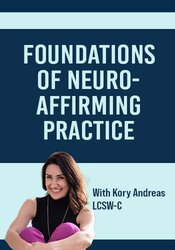
Foundations of Neuro-Affirming Practice: Experiential Training for Working with High-Masking Autism, Burnout, PDA and More
- Speaker:
- Kory Andreas, LCSW-C
- Duration:
- 6 Hours 13 Minutes
- Language:
- Presented in EN, subtitles in EN and FR, handouts in EN and FR
- Format:
- Audio and Video
- Copyright:
-
Oct 03, 2025
- Product Code:
- NOS096554
- Media Type:
- Digital Seminar

Description
Most of today’s treatment approaches were developed without a clear understanding of neurodiversity, so if you’re working with neurodiverse clients and haven’t received the latest specialized training for providing neuro-affirming care, it’s likely you’ll do more harm than good. That’s why we’re excited to partner with Kory Andreas -- one of today’s foremost experts on adult autism and neurodiversity – for this training that will give you the in-depth knowledge and actionable skills you need, so you can start safely and effectively helping your neurodivergent clients right away. This is a unique opportunity to get the most up-to-date skills and insights from a premier neurodivergence expert!
Credit
Speaker

Kory Andreas, LCSW-C Related seminars and products
Kory Andreas, LCSW-C is a clinical social worker and Autism specialist with a deep passion for understanding and supporting neurodivergent individuals. As an "identity-based practitioner", her late-diagnosed neurodivergence is a cornerstone of both her therapy practice and her role as a neurodiversity educator. Kory works in private practice to provide Autism assessments and therapeutic services to neurodivergent individuals and couples. Renowned for her humorous and insightful approach, Kory is a sought-after speaker, delivering neurodiversity awareness and affirming strategies to mental health practitioners, treatment facilities, and the corporate world.
Speaker Disclosures:
Financial: Kory Andreas maintains a private practice. She receives a speaking honorarium and recording royalties from Psychotherapy Networker and PESI, Inc. She has no relevant financial relationships with ineligible organizations.
Non-financial: Kory Andreas has no relevant non-financial relationships.
Additional Info
Program Information
Questions?Visit our FAQ page at www.pesi.com/faq or contact us at www.pesi.com/info
Objectives
- Recognize high-masking Autism and differentiate between camouflaging and compensating behaviors.
- Understand the markers and clinical impact of diagnostic grief.
- Identify strategies and frameworks for helping clients with identity-based acceptance.
- Identify the role of sensory sensitivities, and other body-based challenges in Neurodivergent affirming care.
- Explore the intersection between Autism and other co-occurring conditions and comorbidities, such as PDA, eating disorders, and addiction.
- Implement communication and relational accommodations for Neurodiverse couples and individuals.
- Adapt generalist therapy strategies with Autism-affirming techniques to support nervous system regulation and prevent burnout.
Outline
Introduction to Neuro-Affirming Care
-
Why traditional therapy approaches can be problematic … and even harmful
-
Key principles of Neurodivergent-affirming therapy
-
Steps you can take now to shift away from a pathological approach and start providing affirming care
Recognizing Late-Diagnosed Autism
-
Markers of high-masking Autism in adults
-
Gender differences, masking behaviors and other barriers to diagnosis
-
Self-diagnosis and the role of social media
Sensory Sensitivities and Nervous System Regulation
-
Understanding sensory overload and how it impacts therapy and daily life
-
Identifying sensory triggers and implementing sensory accommodations in session
-
Strategies for calming a dysregulated nervous system
-
Differentiating Autistic burnout from depression
-
Guided creation of a sensory-friendly therapy room checklist
Comorbidities and Co-Occurring Condition in Autistic Clients
-
Identifying and supporting Autistic clients with co-occurring conditions
-
The intersection of Autism with anxiety, OCD, and trauma
-
Interoception and its role in eating disorders
-
Addressing substance use and Rejection Sensitive Dysphoria (RSD)
-
Modifying interventions to honor Neurodivergent processing
Pathological Demand Avoidance (PDA) Profile
-
Defining PDA and recognizing its presentations
-
Why traditional behavioral interventions fail with PDA clients
-
Tools for working with clients with a strong autonomy-driven profile
-
Implementing collaborative, low-demand approaches
Autistic Burnout: Prevention, Recovery, and Support
-
Recognizing and supporting clients experiencing burnout
-
Developing an Autistic burnout recovery planning
-
Long-term strategies to minimize future burnout risk
Ethical Considerations and Collaborative Care
-
Interdisciplinary collaboration for Neurodivergent clients
-
Avoiding therapeutic missteps
-
Working with clients who self-diagnose or seek healthcare advocacy
-
Creating resource lists for clients to navigate external care systems
-
Managing conflicting perspectives when collaborating with other providers
-
Risks and limitations
Case Studies and Interactive Problem-Solving
-
Applying learned concepts to real-world clinical scenarios
Target Audience
- Psychologists
- Licensed Clinical/Mental Health Counselors
- Social Workers
- Addiction Professionals
- Marriage & Family Therapists
- Teachers/School-Based Personnel
- Case Managers
- Occupational Therapists
- Occupational Therapy Assistants
- Speech-Language Pathologists
- School Administrators
Reviews
| 5 |
|
| 4 |
|
| 3 |
|
| 2 |
|
| 1 |
|
Overall: 4.9
Total Reviews: 392
Satisfaction Guarantee
Your satisfaction is our goal and our guarantee. Concerns should be addressed to info@pesicanada.com.
Please wait ...