


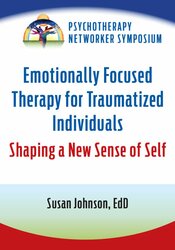
Emotionally Focused Therapy for Traumatized Individuals: Shaping a New Sense of Self
- Speaker:
- Susan Johnson, EdD
- Duration:
- 4 Hours
- Language:
- Presented in EN, subtitles in EN and FR, handouts in EN and FR
- Format:
- Audio and Video
- Copyright:
-
Mar 11, 2022
- Product Code:
- NOS096188
- Media Type:
- Digital Seminar

Description
Emotionally Focused Therapy is a well-known approach to couples treatment that foregrounds attachment in the relationship. What if we could take EFT’s successful framework and translate it to work with individuals? This session introduces EFIT, Emotionally Focused Individual Therapy, which centers on helping individual clients shape a robust and resilient sense of self, able to explore and resolve life-defining traumas, especially those inflicted by attachment figures. As in EFT for couples, attachment science offers the EFIT model a map that simplifies how we frame clients’ problems and shape their journey toward wholeness. You’ll discover:
- The key elements of the attachment perspective on the development of a resilient self, and its significance for clinical intervention
- An on-target map for the creation of transformative moments where vulnerabilities can be faced with balance and competence
- A path to shape corrective emotional experiences to restructure negative ways of defining the self, regulating and organizing inner experience, and engaging with others
- How to apply EFIT to clients suffering from a range of symptoms and post-traumatic issues
Credit
Speaker
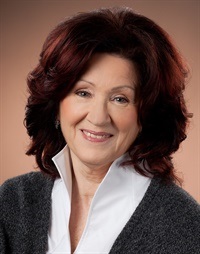
Susan Johnson, EdD Related seminars and products
The late Susan Johnson, EdD, was a best-selling author, clinical psychologist, distinguished research professor, dynamic speaker, and recognized innovator who changed the field of couple therapy. Sue was the primary developer of Emotionally Focused Therapy (EFT), which has demonstrated its effectiveness in over 30 years of peer-reviewed clinical research. She was the director of the International Center for Excellence in Emotionally Focused Therapy and a distinguished research professor at Alliant University in San Diego, California, as well as professor of clinical psychology at the University of Ottawa, Canada. She trained behavioral health providers in EFT worldwide and is still recognized as one of the most prominent researchers and presenters in the couple therapy field.
Speaker Disclosures:
Financial: Dr. Sue Johnson had employment relationships with University of British Columbia, Campbell & Fairweather Psychology Group, Alliant International, University Ottawa, Couple and Family Institute, and the International Center for Excellence in Emotionally Focused Therapy. She received royalties as a published author. Dr. Johnson received a speaking honorarium, recording royalties, and book royalties from PESI, Inc. She had no relevant financial relationships with ineligible organizations.
Non-financial: Dr. Sue Johnson served on the editorial board for the American Journal of Family Therapy (AJFT) and the journal Couple and Family Psychology: Research & Practice.
Additional Info
Program Information
Questions?Visit our FAQ page at https://www.pesicanada.com/faq or contact us at https://www.pesicanada.com/contact-us
Access for Self-Study (Non-Interactive)
Access never expires for this product.
For a more detailed outline that includes times or durations of time, if needed, please contact cepesi@pesi.com
Objectives
- Investigate the history and development of attachment theory.
- Apply interventions as appropriate for progressive stages of EFIT therapy.
- Articulate the five steps of EFIT.
- Evaluate client readiness to move through the stages and steps of EFIT intervention.
- Construct corrective emotional experiences to resolve traumatic blocks to growth.
- Assess for contraindications and safety concerns when implementing EFIT.
Outline
- Origins of Emotionally Focused Individual Therapy
- Patterns of attachment
- Trauma and the attachment perspective on the impact of trauma
- Key goals and stages of EFIT
- Dancing the EFIT Tango – the five basic moves
- The three stages of EFIT
- Case conceptualization and treatment planning
- Shifting world view as treatment progresses
- Applying the CARE model to varied presentations of trauma
- Restructuring the self
- Consolidation and integration
Target Audience
- Psychologists
- Physicians
- Addiction Counselors
- Counselors
- Social Workers
- Marriage & Family Therapists
- Art Therapists
- Nurses
- Other Behavioral Health Professionals
Reviews
| 5 |
|
| 4 |
|
| 3 |
|
| 2 |
|
| 1 |
|
Overall: 4.8
Total Reviews: 606
Satisfaction Guarantee
Your satisfaction is our goal and our guarantee. Concerns should be addressed to info@pesicanada.com.
Please wait ...