


Brainspotting with David Grand: Integrating the Neuroexperiential Model for Rapid Trauma Healing
- Speaker:
- David Grand, PhD
- Duration:
- 11 Hours 01 Minutes
- Language:
- Presented in EN, subtitles in EN and FR, handouts in EN and FR
- Format:
- Audio and Video
- Copyright:
-
May 14, 2025
- Product Code:
- NOS096430
- Media Type:
- Digital Seminar

Tags: Summit/Freebie
Description
Discover Brainspotting: the life-changing approach that equips therapists to access and rapidly process trauma hidden deeply within the brain and body. Evolved out of EMDR and somatic therapy practices, Brainspotting works by locating points in your client’s field of vision as pathways to directly access the deep brain and body. And with that access, we can more quickly and effectively resolve everything from trauma, anxiety, depression, and attachment wounds to chronic fatigue, substance use, chronic pain, and performance issues.
Credit
Speaker
David Grand, PhD Related seminars and products
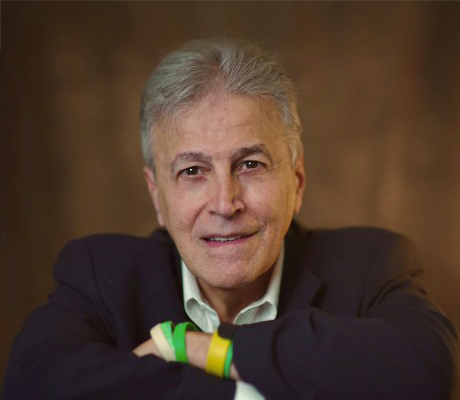
David Grand, PhD, is a psychotherapist, writer, lecturer, performance coach, and humanitarian famous for the discovery and development of the internationally acclaimed Brainspotting method, which brings about life-changing breakthroughs at "Warp Speed." Dr. Grand is a Licensed Clinical Social Worker with a PhD from International University, and is renowned for his groundbreaking discoveries and advancements in the arenas of healing trauma and enhancing performance and creativity. His Brainspotting method and BioLateral Sound are now used by thousands of therapist on every continent seeking to break through the limitations of talk therapy. Dr. Grand is the author of Brainspotting: The Revolutionary New Therapy for Rapid and Effective Change.
Speaker Disclosures:
Financial: Dr. David Grand maintains a private practice and is a developer for BioLateral Sound Recordings. He is the developer of the Brainspotting method and receives compensation as a national lecturer and receives royalties as a published author. Dr. Grand receives a speaking honorarium and recording royalties from Psychotherapy Networker and PESI, Inc. He has no relevant financial relationships with ineligible organizations.
Non-financial: Dr. David Grand has no relevant non-financial relationships.
Additional Info
Program Information
Questions?Visit our FAQ page at https://www.pesicanada.ca/faq or contact us at https://www.pesicanada.ca/contact-us.
Objectives
- Determine how eye positions have relevance in potentially accessing frozen trauma in the brain.
- Identify the role of therapist in a Brainspotting session.
- Determine how a client brings to session a frame of their experiences that the therapist recognizes, receives and holds with them.
- Evaluate the evidence supporting Brainspotting therapy as a treatment intervention for posttraumatic stress disorder (PTSD).
- Determine how the mutually held frame produces focused mindfulness processing.
- Summarize how developmental trauma yielding symptomatic manifestations is inaccurately labeled as disordered.
- Identify the hypothesized neurological underpinnings of how Brainspotting works.
- Define the uncertainty principle as it relates to Brainspotting.
- Use the inside and outside window Brainspotting technique.
- Utilize “Part Spotting” with dissociation to facilitate higher functioning of healthy parts and ask harmful parts to take a step back.
- Develop “Part-Spotting” with high functioning clients as well as the most dissociative and fragile clients.
- Evaluate how Part-Spotting can get stuck clients moving forward towards a higher functioning life.
Outline
DAY 1
-
What is Brainspotting and how does it relate to trauma recovery
-
How eye position can help heal trauma
-
The Brainspotting Model
-
Core Principles and the clinical application of Brainspotting
-
Integrating Brainspotting into your practice
-
Risks and Limitations
-
Demonstrations
DAY 2
-
Lecture on Dreamspotting and Q&A
-
Dreamspotting Demo and debrief
-
Lecture on Partspotting and Q&A
-
Partspotting Demo and debrief
-
Conclusion
Target Audience
- Counselors
- Social Workers
- Psychologists
- Marriage and Family Therapists
- Addiction Counselors
- Other Mental Health Professionals
Reviews
| 5 |
|
| 4 |
|
| 3 |
|
| 2 |
|
| 1 |
|
Overall: 4.9
Total Reviews: 1432
Satisfaction Guarantee
Your satisfaction is our goal and our guarantee. Concerns should be addressed to info@pesicanada.com.
Please wait ...