


Bipolar Disorders, 8/12/2026 9:00:00 AM EDT, Live Webinar More info »
Bipolar Disorders, 3/11/2026 12:00:00 AM EDT, Digital Seminar More info »

Bipolar Disorders
Current Best Practices, Diagnostic Tools and Evidence-Based Treatment Techniques
- Speaker:
- James Phelps, MD
- Duration:
- Full Day
- Language:
- Presented in EN, subtitles in EN and FR, handouts in EN
- Format:
- Audio and Video
- Product Code:
- LWC150574
- Brochure Code:
- PWZ95249
- Media Type:
- Live Webinar - Also available: Digital Seminar | Live Webinar
Description
- Differentiate bipolar from look-alike conditions like anxiety, depression, and trauma
- Integrate the latest science and research for optimum outcomes
- Learn to use evidence-based tools to stabilize and treat clients
- What you need to know about medications
- Includes a complete workbook with the most effective interventions
Our understanding of bipolar has changed dramatically in just the last few years.
It’s not just “mania and depression” but a spectrum of mood problems deeply impacted by trauma, stress, lifestyle, and identity.
And these new findings are making diagnosis and treatment more accurate, timely, and tailored than ever before.
That’s why we’re offering this NEW one day training with bipolar expert Jim Phelps, MD author of A Spectrum Approach to Mood Disorders.
In just one day he’ll get you up to speed on recent advances PLUS show you everything you need to:
- Accurately differentiate bipolar from look-alike conditions like anxiety, depression and trauma
- Recognize mixed states that are often overlooked
- Apply evidence-based therapies for real-world results
- Integrate the latest best practices on lifestyle, mood-tracking and circadian rhythm science
If you work with clients with depression, anxiety or trauma – today we know that some of them are actually living with an under-recognized form of bipolar disorders.
Don’t risk missing the signs or relying on outdated approaches.
Join Dr. Phelps and walk away with the clarity, confidence, and skills you need to transform outcomes for clients living with bipolar disorder.
Register now!
Credit
Speaker
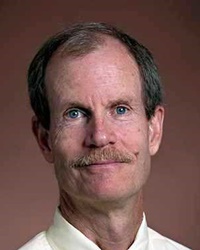
James Phelps, MD Related seminars and products
Director of the Mood Disorders Program
Samaritan Mental Health
Dr. James Phelps, has worked in inpatient, outpatient, and primary care consultation and liaison programs for over 25 years, including private practice, while supporting a closet-academic’s habit of following the psychiatric literature. He is Bipolar Section Editor for Psychiatric Times,is author of A Spectrum Approach to Mood Disorders and has written two other books on bipolar disorders for patients and families. He has specialized in bipolar spectrum variations for over 15 years. He has authored multiple peer-reviewed articles on mood disorders. His non-profit website, PsychEducation.org, focuses on complex bipolar variations; it has received over a million visitors.
Dr. Phelps received his MD from Case Western Reserve University and completed his residency in psychiatry and a fellowship in medical education at the University of New Mexico. Current work focuses on primary care psychiatric consultation. Dr. Phelps has several education projects still underway and he’s helped a professional science film-maker make a documentary about the bipolar spectrum, including cutting-edge research on what causes bipolar disorder: BrainstormTheFilm.
Speaker Disclosures:
Financial: Dr. James Phelps receives royalties as a published author. He receives a speaking honorarium and recording royalties from PESI, Inc. He has no relevant financial relationships with ineligible organizations.
Non-financial: Dr. James Phelps is a member of the International Society for Bipolar Disorder. He is the founder and medical director of DepressionEducation.org.
Alternate Dates

Additional Info
Program Information
Access Period for Live WebcastFor live CE credit, you must watch the live webcast in its entirety at its scheduled time and complete the CE quiz and evaluation within one week. You will have access for 90 days after the program for review.
Webcast Schedule
Please note: There will be a 70-minute lunch and two 15-minute breaks; one in the morning and one in the afternoon. Lunch and break times will be announced by the speaker and at their discretion. A more detailed schedule is available upon request.
Questions?
Visit our FAQ page at https://www.pesicanada.ca/faq or contact us at https://www.pesicanada.ca/contact-us.
Objectives
- Differentiate bipolar spectrum symptoms from major depressive disorder and schizophrenia using a dimensional, transdiagnostic framework.
- Analyze mixed mood states and subtle hypomanic or depressive presentations to improve diagnostic accuracy.
- Evaluate current research on biological, genetic, neuroimmune, circadian, mitochondrial, and gut microbiota factors contributing to bipolar disorders.
- Analyze environmental, behavioral, and pharmacologic factors that may destabilize clients within bipolar disorder
- Choose interventions that stabilize mood, including sleep/circadian regulation, behavioral interventions, and self-monitoring tools.
- Utilize CBT, FFT, and social rhythm therapy psychotherapies for bipolar disorder.
Outline
Bipolar 101: The Latest Research, Causes, and More
- Recent identification of several key genes
- Circadian clocks: some bipolar brains drift toward a weaker 24-hour rhythm
- Brian fuels
- Reward sensitivity
- The gut microbiome and inflammation
Getting the Right Diagnosis: Beyond the DSM™, Mixed States, and Diagnostic Overlap
- Mania, hypomania, and subtle hypomania
- Are we pathologizing “normal” variations in experience?
- How fast is rapid cycling? Where is the boundary with “borderlinity”?
- Bipolar mixed state – or PTSD with depression? Anxiety with depression? ADHD?
- Mixed mania is straightforward: irritable, agitated, dysphoric
- Mixed depression: unipolar yet bipolar? How does that make sense?
- The most common mixed state symptoms
- Diagnostic overlap
- Compare treatment options when there is no clear path
Treatment Fundamentals
- Stop the cycling
- Start with non-medication approaches
- Destabilizers to target
- Street stimulants
- Irregular sleep patterns
- Stabilizers to offer clients
- Circadian tools: controlling light and darkness
- Behavioral approaches to sleep
- Light boxes: under your bipolar-specific guidance
- Dark therapy
- Bipolar-tracking app’s and how to use them
Using the Top Bipolar Psychotherapies
- Psychoeducation
- Bipolar-specific CBT
- Social Rhythm therapy (SRT)
- Family-Focused Therapy (FFT)
- Bipolar adaptations of DBT, EMDR, ACT, Mindfulness
- Research, risks and limitations
How Medications and Therapists Fit Together
- Why basic understanding of psychiatric medications is important
- Mood stabilizers with antidepressant effects
- Anti-manics that aren’t antipsychotics
- Antipsychotics
- Lithium
Target Audience
- Counselors
- Social Workers
- Marriage and Family Therapists
- Psychologists
- Psychiatrists
- Registered Psychotherapists
- Nurse Practitioners
- Case Managers
- Other Mental Health Professionals
Reviews
Satisfaction Guarantee
Your satisfaction is our goal and our guarantee. Concerns should be addressed to info@pesicanada.com.
Please wait ...