


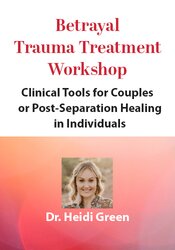
Betrayal Trauma Treatment Workshop
Clinical Tools for Couples or Post-Separation Healing in Individuals
- Speaker:
- Heidi Green, PsyD
- Duration:
- Full Day
- Language:
- Presented in EN, subtitles in EN and FR, handouts in EN
- Product Code:
- LWC150850
- Brochure Code:
- PWZ95986
- Media Type:
- Live Webinar - Also available: Digital Seminar

Description
Get a complete clinical toolkit for working with individuals or couples in just one day of training
- Tools for attachment injuries, avoidance and dependency
- Repair shattered trust – or empower clients to heal after separation
- Easy to use techniques for emotional flooding and somatic symptoms
- Rebuild identity and restore a sense of self-worth
- Interventions from EFT, EMDR and more
Do you love me? … Did you ever love me?”
When trust is shattered by infidelity, clients question their worth and everything they thought was true.
But whether you’re treating clients individually or with their partner …
… this isn’t just “trauma work” or standard couples therapy.
You need the right skills and clinical tools to stabilize their nervous system, process the trauma and guide them toward relational recovery – or healthy separation.
That’s why we created this one-day workshop with Dr. Heidi Green, a leading expert in betrayal trauma healing.
She’ll walk you through how to do it all, from assessment to step-ty-step instruction on using interventions that promote stabilization, emotional regulation, and empowerment – so you’re ready to:
- Calm emotional flooding, reduce somatic symptoms and restore a sense of safety
- Repair shattered trust in couples – or empower clients to heal through separation
- Work effectively with attachment injuries driving fear, avoidance, and dependency
- Rebuild identity and restore a sense of self-worth
- Ethically involve the betraying partner in treatment when appropriate
This workshop is your roadmap for breaking clients free from cycles of fear, shame, and disconnection – and helping them reclaim their lives after betrayal.
Register now!
Credit
Speaker

Heidi Green, PsyD Related seminars and products
Dr. Heidi Green, is a highly respected clinical psychologist and a leading expert in trauma healing and personal empowerment. The author of The Path to Self-Love and World Domination (2020) and You Don’t Have to Love Yourself (2026).
Dr. Green’s therapeutic specialties include trauma, self-esteem, codependency, body image, boundaries, healthy sexuality, depression, anxiety, crisis intervention, and more. Using some of today’s most in-demand evidence-based treatments like DBT and EMDR, Dr. Green is recognized for her remarkable ability to connect with individuals and guide them on a transformative journey of self-discovery, personal growth, and improved well-being. In addition, Dr. Green is a registered yoga teacher and enjoys incorporating yoga practices into her trauma healing work with clients.
Speaker Disclosures:
Financial: Dr. Heidi Green maintains a private practice and receives royalties as a published author. She receives a speaking honorarium and recording royalties from PESI, Inc. She has no relevant financial relationships with ineligible organizations.
Non-financial: Dr. Heidi Green is a member of the American Psychological Association.
Additional Info
Program Information
Access Period for Live WebcastYou will have access for 90 days after the program for review. For live CE credit, you must watch the live webcast in its entirety at its scheduled time and complete the CE quiz and evaluation within one week. Please note that this requirement may vary by credit type. Please see detailed credit information for specific requirements for each credit type.
Webcast Schedule
Please note: There will be a 70-minute lunch and two 15-minute breaks; one in the morning and one in the afternoon. Lunch and break times will be announced by the speaker and at their discretion. A more detailed schedule is available upon request.
Questions?
Visit our FAQ page at https://www.pesicanada.ca/faq or contact us at https://www.pesicanada.ca/contact-us.
Objectives
- Differentiate between the trauma induced by betrayal from a close relationship and other trauma types.
- Utilize appropriate screening and assessment tools to evaluate the severity of trauma, safety concerns, and client stabilization needs.
- Utilize interventions that support emotional regulation, somatic awareness, and cognitive restructuring during the treatment process.
- Choose techniques from Emotionally Focused Couple Therapy and Gottman method of couples therapy to facilitate relational repair following infidelity.
- Choose techniques to guide the betraying partner in developing empathy, accountability, and transparent behaviors that support the betrayed partner’s recovery.
- Examine how Eye Movement Desensitization and Reprocessing (EMDR) can be used to work with trauma symptomology stemming from betrayal, abandonment, or emotional neglect within ta romantic relationship.
Outline
Clinical Assessment: Building a Clear Picture
- Gather history and betrayal timeline
- Screen for trauma, PTSD, depression, and anxiety
- How to identify compulsive sexual behaviors
- Assess safety and determine therapy structure:
- Individual vs. couple work
- Crisis vs. long-term planning
- Research, risks and limitations
Conceptual Models of Betrayal
- Trauma model
- Attachment and Emotionally Focused Therapy (EFT) perspective
- Approaches to trust repair
- Influence of personal and family-of-origin histories
Working with the Injured Partner: Tools and Techniques to Stabilize and Empower
- Crisis stabilization and grounding techniques
- Emotional regulation strategies
- Address obsessive searching, rumination, and triggers
- Build internal safety and external support systems
Working with the Partner Who Betrayed: Strategies to Foster Accountability
- Understand motivations and behavioral patterns
- Accountability without reinforcing shame
- Coaching disclosures and honesty
- Manage defensiveness and build empathy
Rebuild Trust and Communication in Couples
Frameworks to Help Intimate Partners Repair and Reconnect
- Prepare both partners for disclosure
- The 3 A’s Framework:
- Atone: Responsibility, empathy, restitution
- Attune: Emotional connection and repair attachment injuries
- Attach: Rebuild intimacy and creating new agreements
- Safe conversation techniques
- Manage conflict without retraumatizing
- “Triggers Protocol” for couple stabilization
Support Clients Who Choose to Leave: Healing After Separation
- Signs that repair attempts are harmful or unsafe
- Indicators of ongoing deception, abuse, or lack of accountability
- Normalize the grief and identify shifts that come with leaving
- Address pressures to “stay and forgive”
- Rebuild identity and self-worth outside the partnership
- Handling triggers during divorce or custody negotiations
- Build a vision for life after betrayal
Working with Trauma Responses and Complex Situations
- Process flashbacks, triggers, and emotional flooding
- Use EMDR and other modalities for betrayal trauma
- Help partners understand trauma cycles
- Navigate ongoing deception and ambivalence
- Address addiction and betrayal
- Recognize co-occurring domestic abuse (red flags and boundaries)
Target Audience
- Counselors
- Social Workers
- Marriage & Family Therapists
- Psychologists
- Case Managers
- Registered Psychotherapists
- Addiction Counselors
- Other Mental Health Professionals
Reviews
Satisfaction Guarantee
Your satisfaction is our goal and our guarantee. Concerns should be addressed to info@pesicanada.com.
Please wait ...