
”I’m not myself anymore.”
I’m broken.”
”I can’t let go of what happened.”
As a therapist, you’ve likely heard these words from clients who feel defined by their trauma.
And while traditional treatments manage symptoms, many still struggle to reclaim their sense of wholeness.
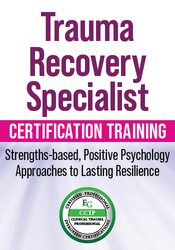
That’s where the Trauma Recovery Specialist Certification Training comes in. Led by Dr. MaryCatherine McDonald – renowned researcher, author and trauma survivor – and Taune Lyons, LMFT, seasoned clinician and Somatic Experiencing Practitioner, this course offers a groundbreaking, strengths-based approach to trauma recovery.
What you’ll gain:
Upon completion, you’ll be eligible for the Certified Clinical Trauma Professional (CCTP) credential, proving your commitment to top-tier trauma care. Plus, your first year of certification is FREE (a $99.99 value)*!
*Professional standards apply. Visit www.evergreencertifications.com/CCTP for professional requirements.
NOTE: Each purchase includes CE credit for one individual (participants in full attendance will be able to print the certificate of completion after passing the online post-test (80% passing score) and completing the evaluation). Instructional methods will include PowerPoint, didactic lecture, Q&A, and others.
Continuing Education Information: Credits listed below are for full attendance at the live, interactive webinar only. This webinar is being broadcast live in real-time and must be attended live, in its entirety, in order to earn credit. You will be able to type questions to the speaker. The speaker will see the questions and address them during the presentation as time allows. Please note, your licensing board dictates whether web-based activities are an acceptable form of continuing education, as well as which credit types are acceptable for continuing education hours. Please refer to your licensing board's rules and regulations. If your profession is not listed, please contact your licensing board to determine your continuing education requirements and check for reciprocal approval. For other credit inquiries not specified below, please contact info@pesi.com or 800-844-8260 before the event.
Materials that are included in this course may include interventions and modalities that are beyond the authorized practice of your profession. As a licensed professional, you are responsible for reviewing the scope of practice, including activities that are defined in law as beyond the boundaries of practice in accordance with and in compliance with your profession's standards.
For Planning Committee disclosures, please see the statement above. For speaker disclosures, please see the faculty biography.
Earn up to 12.5 CE hours. Please see below, for more details, as credit amounts vary by jurisdiction and profession.
PESI, Inc. is approved by the Canadian Counselling and Psychotherapy Association to offer continuing education for counsellors and psychotherapists. PESI, Inc. maintains responsibility for the program. This activity is approved for 12.5 credit hours.
This activity qualifies for 760 continuing education minutes as required by many national and local licensing boards and professional organizations. Save your activity advertisement and certificate of completion, and contact your own board or organization for specific requirements.
PESI, Inc., #1062, is approved as an ACE provider to offer social work continuing education by the Association of Social Work Boards (ASWB) Approved Continuing Education (ACE) program. Regulatory boards are the final authority on courses accepted for continuing education credit. ACE provider approval period: January 27, 2023 - January 27, 2026. Social workers completing this course receive 12.75 Clinical continuing education credits.
Course Level: Intermediate Format: Synchronous distance. Full attendance is required; no partial credits will be offered for partial attendance.
Canadian Social Workers: Canadian provinces may accept activities approved by the ASWB for ongoing professional development.
| File type | File name | Number of pages | |
|---|---|---|---|
| Manual - 2-day Trauma Recovery Specialist Certification Training (5.5 MB) | 38 Pages | Available after Purchase |
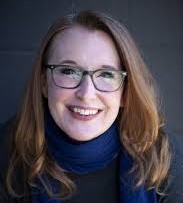
MaryCatherine (MC) McDonald, PhD, is a research professor and author specializing in trauma, stress, and resilience. With over a decade of experience researching and teaching the neuroscience and psychology of trauma, she is passionate about destigmatizing mental health and reframing trauma as a strength-based response.
Dr. McDonald earned her master’s degree at The New School, researching traumatic loss, and completed her PhD at Boston University. She has published extensively, including her latest book, Unbroken: The Trauma Response is Never Wrong (and other things you need to know to take back your life), released in 2023 by Sounds True.
In her thriving coaching practice, she has worked with combat veterans, survivors of sexual assault, individuals navigating career transitions, and more. Since 2010, she has also developed trauma-based curricula for nonprofits across the US.
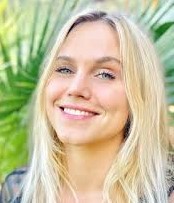
Taune Lyons, MFT, brings a wealth of specialized expertise in trauma and integrative therapeutic practices. With a master’s integral counseling psychology from the California Institute of Integral Studies, Taune is also a Somatic Experiencing Practitioner, having trained under experts like Berns Galloway, Abi Blakeslee, and Linda Stelte. Her professional development includes in-depth workshops with leaders in trauma and attachment, including Gabor Maté and Peter Levine, as well as advanced training in clinical applications of the adult attachment interview, sex therapy under AASECT-approved supervisor Gail Guttman, and couples therapy with the Couples Center. Additionally, Taune’s grounding in interpersonal neurobiology, meditation, and nonviolent communication adds a layered, integrative approach to her trauma recovery work, making her an invaluable resource in this training.
Speaker Disclosures:
Financial: Taune Lyons maintains a private practice and has employment relationships with Single on Purpose App, The Couples Center, and the Marina Counseling Center. She receives a speaking honorarium from PESI, Inc. She has no relevant financial relationships with ineligible organizations.
Non-financial: Taune Lyons has no relevant non-financial relationships.
For live CE credit, you must watch the live webcast in its entirety at its scheduled time and complete the CE quiz and evaluation within one week. You will have access for 90 days after the program for review.
Please note: There will be a 70-minute lunch and two 15-minute breaks; one in the morning and one in the afternoon. Lunch and break times will be announced by the speaker and at their discretion. A more detailed schedule is available upon request.
Visit our FAQ page at www.pesi.com/faq or contact us at www.pesi.com/info
Satisfaction Guarantee
Your satisfaction is our goal and our guarantee. Concerns should be addressed to info@pesicanada.com.
Please wait ...