

What to Do When Your Client is Considering Suicide

One of the biggest fears for most therapists is losing a client to suicide. And with suicide being the second leading cause of death for people aged 15-34, it’s certainly a valid one.
Unfortunately, there’s a long list of reasons why clients often deny having suicidal thoughts—even if they’ve already thought through a plan and intend to act on it. It makes our job of quickly and effectively intervening even more critical. And we need to take that seriously.
But it can be hard to make that first move, especially when you have doubts. However, I believe it’s always better to over-react than not react enough.
If you have a client who has a suicide plan or has expressed any intent to harm themselves, get them to a hospital. You may be able to have EMS transport the client for you, but if not, find a trusted friend or family member of the client to drive them-but only if it's clear that the client wants to go. It's important to note that 1.) the client should not be allowed to drive themselves and 2.) it is not your responsibility to drive the client yourself. Safety for everyone is critical here.
Sometimes, your client will refuse to go to the hospital. When this is the case, I recommend initiating the involuntary commitment process. I encourage you to develop relationships with area psychiatric facilities, their administrators, and doctors to try and make this process as smooth as possible. You may also want to consider a soft handoff when you’re able to. Try calling the hospital’s emergency department when you are sending them a patient so they have advanced notice. Strong relationships, good communication, and a solid plan of action can truly make a difference in life or death.
If a client lacks suicidal intent, but you are still concerned, there may be other options, but only if steps are taken to create a Safety Plan.
Before we talk about creating Safety Plans, it’s important to note that Safety Plans are not the same as Contracts For Safety.
The concept of “contracting for safety” or agreeing to a “no harm contract” has been used in clinical practice for many years.
First described in clinical literature in 1973, these contracts were originally designed for clients with whom the clinician had been working with for a long time. As the name implies, they were used as a way for patients to promise to clinicians that they will try not to harm themselves when they are suicidal.
However, there are a couple of issues I have with these contracts.
First and foremost, the terms are not consistently defined or used, and clinicians generally do not receive formal training in suicide assessments.
There is also an issue with reliability. Can a person with a serious mood or psychotic disorder truly understand, consent, and participate in a contracting process?
Furthermore, these types of contracts don’t protect against legal liability. This can be a common misconception.
But my biggest problem with these contracts? There is little evidence that they actually reduce suicide. This provides a false sense of security for the clinician. While the therapist may feel better, the client may not be truly safe.
I believe a much better strategy includes a detailed, lethality evaluation, open dialogue between patients and clinicians, and the creation of a Safety Plan. These three establish a therapeutic alliance and allow ongoing comprehensive assessments of suicide risk over time.
Creating an effective Safety Plan starts with determining if the client is able to actively participate in the creation of it. This requires them to be in a reliable state of mind. If they have cognitive problems or are psychotic, they are often no longer considered safe.
Safety Plans also require input and commitment of another person, preferably a friend or family member of the patient or a professional caregiver. Safety Plans work even better when multiple friends and family are involved.
Other things to consider:
Unfortunately, there’s a long list of reasons why clients often deny having suicidal thoughts—even if they’ve already thought through a plan and intend to act on it. It makes our job of quickly and effectively intervening even more critical. And we need to take that seriously.
But it can be hard to make that first move, especially when you have doubts. However, I believe it’s always better to over-react than not react enough.
My client may be considering suicide. Now what?
If you have a client who has a suicide plan or has expressed any intent to harm themselves, get them to a hospital. You may be able to have EMS transport the client for you, but if not, find a trusted friend or family member of the client to drive them-but only if it's clear that the client wants to go. It's important to note that 1.) the client should not be allowed to drive themselves and 2.) it is not your responsibility to drive the client yourself. Safety for everyone is critical here.
Sometimes, your client will refuse to go to the hospital. When this is the case, I recommend initiating the involuntary commitment process. I encourage you to develop relationships with area psychiatric facilities, their administrators, and doctors to try and make this process as smooth as possible. You may also want to consider a soft handoff when you’re able to. Try calling the hospital’s emergency department when you are sending them a patient so they have advanced notice. Strong relationships, good communication, and a solid plan of action can truly make a difference in life or death.
If a client lacks suicidal intent, but you are still concerned, there may be other options, but only if steps are taken to create a Safety Plan.
Before we talk about creating Safety Plans, it’s important to note that Safety Plans are not the same as Contracts For Safety.
Why Contracts for Safety aren’t helpful
The concept of “contracting for safety” or agreeing to a “no harm contract” has been used in clinical practice for many years.
First described in clinical literature in 1973, these contracts were originally designed for clients with whom the clinician had been working with for a long time. As the name implies, they were used as a way for patients to promise to clinicians that they will try not to harm themselves when they are suicidal.
However, there are a couple of issues I have with these contracts.
First and foremost, the terms are not consistently defined or used, and clinicians generally do not receive formal training in suicide assessments.
There is also an issue with reliability. Can a person with a serious mood or psychotic disorder truly understand, consent, and participate in a contracting process?
Furthermore, these types of contracts don’t protect against legal liability. This can be a common misconception.
But my biggest problem with these contracts? There is little evidence that they actually reduce suicide. This provides a false sense of security for the clinician. While the therapist may feel better, the client may not be truly safe.
I believe a much better strategy includes a detailed, lethality evaluation, open dialogue between patients and clinicians, and the creation of a Safety Plan. These three establish a therapeutic alliance and allow ongoing comprehensive assessments of suicide risk over time.
Creating an effective Safety Plan
Creating an effective Safety Plan starts with determining if the client is able to actively participate in the creation of it. This requires them to be in a reliable state of mind. If they have cognitive problems or are psychotic, they are often no longer considered safe.
Safety Plans also require input and commitment of another person, preferably a friend or family member of the patient or a professional caregiver. Safety Plans work even better when multiple friends and family are involved.
Other things to consider:
- Where will the patient be staying and for how long?
- How will weapons—including knives and cutlery—be removed from the patient’s access
- What safe, secure place will medication be stored? Who will give individual doses to the patient?
- How will the next few days be structured? How will the client stay active?
- What outpatient resources are available for the patient? How long will it take him/her to access these resources?
- What financial issues need to be resolved?
- What transportation issues need to be resolved?
- What is the plan if the patient’s symptoms get worse?
If a client has a suicide plan or has expressed any intent to harm themselves, get them to a hospital.
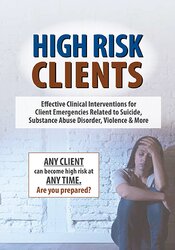
High Risk Clients: Effective Clinical Interventions for Client Emergencies Related to Suicide, Substance Use Disorder, Violence & More
Paul Brasler, LCSW, will navigate you through five of the most difficult scenarios in mental health today.


Certified Youth Mental Health Specialist Course: Interventions for Anxiety, Depression, Toxic Stress, Self-Harm, & More
Become a Certified Youth Mental Health Specialist (CYMHS) – Registrations includes FREE certification, CE hours, and new practical strategies to empower the next generation to thrive in today’s world.
You May Also Be Interested In These Related Blog Posts


