 This program is no longer active, however there are other versions of this program in which you may be interested.

Certification Training: Growing Up Anxious: Treating Anxiety Disorders in a Generation Hyper-focused on Achievement, Technology & Safety, 2/13/2025 12:00:00 AM EST, Digital Seminar More info »
Not Found
Digital Seminar

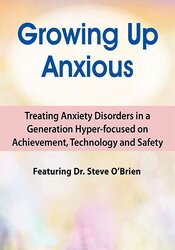
2-Day Growing Up Anxious: Treating Anxiety Disorders in a Generation Hyper-focused on Achievement, Technology & Safety


Speaker:
Steven O'Brien, PsyD
Duration:
12 Hours 12 Minutes
Language:
Presented in EN, handouts in EN
Copyright:
Sep 22, 2020
Product Code:
POS057005
Media Type:
Digital Seminar - Also available: Digital Seminar


Description

We all want kids to be successful, safe, and secure, but such good intentions are having unintended consequences.

Three societal ingredients…. a hyper-academic mindset, preoccupation with safety, and a tech-obsessed society… are fueling childhood anxiety, leaving kids fearful, avoidant, and ill-equipped for adulthood.

Watch child psychologist Steve O’Brien, Psy.D., for 2 days filled with practical strategies as he presents a three-level treatment model for childhood anxiety using targeted, evidenced-based therapies to:

  • Connect with and “rewire” anxious children and families
  • Provide child-friendly instruction about anxiety and the brain
  • Promote self-expression and healthy coping in shut-down kids
  • Reduce debilitating social anxiety in adolescents
  • Treat technology-related worries, obsessions, and compulsions
  • Develop anxiety-free safety plans for distressed kids and parents

Don’t miss out on this cutting-edge program for equipping and empowering kids to not only cope with anxiety, but to thrive as they develop a growing sense of both competence and confidence! 

Credit

Program Information

Planning Committee Disclosure - No relevant relationships

All members of the PESI, Inc. planning committee have provided disclosures of financial relationships with ineligible organizations and any relevant non-financial relationships prior to planning content for this activity. None of the committee members had relevant financial relationships with ineligible companies or other potentially biasing relationships to disclose to learners.  For speaker disclosures, please see the faculty biography.


Canada Credit - *

NOTE: Tuition includes one free CE Certificate (participant will be able to print the certificate of completion after passing the online post-test (80% passing score) and completing the evaluation). Instructional methods will include PowerPoint, didactic lecture, and others.

Continuing Education Information:  Listed below are the continuing education credit(s) currently available for this non-interactive self-study package. Program content is reviewed periodically per accrediting board rules for currency and appropriateness for credit. Credit approvals are subject to change. Please note, your licensing board dictates whether self-study is an acceptable form of continuing education, as well as which credit types are acceptable for continuing education hours. Please refer to your licensing board's rules and regulations. If your profession is not listed, please contact your licensing board to determine your continuing education requirements and check for reciprocal approval. 
For other credit inquiries not specified below, please contact info@pesi.com or 800-844-8260 before purchase.

Materials that are included in this course may include interventions and modalities that are beyond the authorized practice of your profession.  As a licensed professional, you are responsible for reviewing the scope of practice, including activities that are defined in law as beyond the boundaries of practice in accordance with and in compliance with your profession's standards.  

For Planning Committee disclosures, please see the statement above.  For speaker disclosures, please see the faculty biography.


Canada Credit - ---

Earn up to 12.5 CE hours. Please see below, for more details, as credit amounts vary by jurisdiction and profession. 


Canada Credit - Canadian Counsellors and Psychotherapists

PESI, Inc. is approved by the Canadian Counselling and Psychotherapy Association to offer continuing education for counsellors and psychotherapists. PESI, Inc. maintains responsibility for the program. This self-study activity is approved for 12.5 credit hours.


Canada Credit - Social Workers - National ASWB ACE

PESI, Inc., #1062, is approved as an ACE provider to offer social work continuing education by the Association of Social Work Boards (ASWB) Approved Continuing Education (ACE) program. Regulatory boards are the final authority on courses accepted for continuing education credit. ACE provider approval period: January 27, 2023 - January 27, 2026. Social workers completing this course receive 12.5 Clinical continuing education credits.


Course Level: Intermediate  Format: recorded  asynchronous distance. Full attendance is required; no partial credits will be offered for partial attendance.


Canadian Social Workers: Canadian provinces may accept activities approved by the ASWB for ongoing professional development.


Canada Credit - Canadian Psychologists

PESI, Inc. is approved by the Canadian Psychological Association to offer continuing education for psychologists. PESI, Inc. maintains responsibility for the program. This program is approved for 12.5 self-study continuing education hours. Full credit statement at: www.pesi.com/cpa-statement


Canada Credit - Other Professions

This self-study activity qualifies for 12.5 continuing education clock hours as required by many national and local licensing boards and professional organizations. Save your activity advertisement and certificate of completion, and contact your own board or organization for specific requirements.


Handouts

Speaker

Steven O'Brien, PsyD's Profile

Steven O'Brien, PsyD Related seminars and products


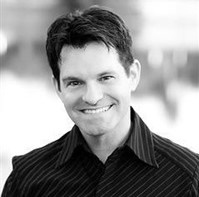
Steve O’Brien, PsyD is a clinical psychologist with over 30 years of experience working with children, adolescents, young adults, and families in his Clearwater, Florida practice. He is a respected national consultant for mental health professionals seeking guidance on the treatment of anxiety and mood disorders, ADHD, Autism Spectrum Disorders, and adjustment challenges in divorced and blended families.

Since 2017, Dr. O’Brien has provided continuing education and professional training for mental health clinicians, focusing on evidence-based interventions for anxiety, depression, and neurodevelopmental disorders in youth. He is the author of The Essential Guide to Treating Childhood and Adolescent Anxiety, a clinical manual designed to enhance treatment outcomes.

His integrative-systems approach combines CBT, interpersonal techniques, and exposure/desensitization strategies, all tailored to the developmental needs of young clients and their families. Intensive parent consultation – emphasizing psychoeducation, communication skills, and behavior modification – is a cornerstone of his therapeutic work.

Dr. O’Brien has worked in numerous healthcare environments, including community mental health, psychiatric, inpatient/residential, substance abuse, and medical facilities. He also served as associate professor of child-adolescent studies at the Florida School of Professional Psychology. In addition to his clinical work, Dr. O’Brien is an app developer (Life@Home by Psychtouch.com) and a frequent guest on local news outlets for his expertise on childhood anxiety. Visit obrienpsychology.com for more information.


Speaker Disclosures:
Financial: Dr. Steven O'Brien maintains a private practice. He receives a speaking honorarium, recording and book royalties from Psychotherapy Networker and PESI, Inc. He has no relevant financial relationships with ineligible organizations.
Non-financial: Dr. Steven O’Brien is a member of the American Psychological Association and the Florida Psychological Association.


Additional Info

Program Information

Access for Self-Study (Non-Interactive)

Access never expires for this product.


Questions?

Visit our FAQ page at https://www.pesicanada.ca/faq or contact us at https://www.pesicanada.ca/contact-us.


Objectives

  1. Summarize the psychosocial characteristics of the “internet generation” and their contribution to anxiety development in children and adolescents.
  2. Describe the primary developmental, systemic, academic, and social-technological factors relevant to the development and maintenance of anxiety disorders in children and families.
  3. Identify the various social, emotional, and behavioral manifestations of anxiety in children in multiple contexts, including home and school.
  4. Utilize semi-structured observational and interview methods for collecting relevant history and clinical information with anxious and minimally verbal children and their parents/caretakers.
  5. Determine effective rapport-building strategies with anxious, resistant, and defensive children and parents/caretakers.
  6. Adopt a ‘parent consultation’ model as a supplement to individual child and family therapy and as part of an integrated treatment approach.
  7. Conduct ‘Child-Focused Family Therapy’ using therapeutic agendas and directive communication techniques.
  8. Teach children a developmentally appropriate psychoeducation framework for understanding the relationship between anxiety, the brain, and the body.
  9. Implement self-regulation strategies to reduce child/adolescent anxiety and promote adaptive coping.
  10. Identify clinical, co-occurring diagnostic patterns with respect to anxiety and related disorders in children and how to determine initial treatment targets.
  11. Distinguish between over-arching versus disorder-specific interventions for child/adolescent anxiety. As well as the 3 levels of anxiety treatment.
  12. Implement and integrate developmentally-appropriate CBT, desensitization, and exposure therapy techniques to enhance treatment with anxious children.

Outline

GROWING UP ANXIOUS - 3 KEY INGREDIENTS
EARLY EMPHASIS ON HIGH ACHIEVEMENT AND PERFORMANCE
  • Emotional costs of a hyper-academic mindset and over-evaluation
  • Performance philosophy pitfalls: perfectionism and procrastination
  • Consequences of strong individualism: anti-collaborative attitudes
TECHNOLOGY IMMERSION: PLUGGED IN BUT TUNED OUT
  • Tech-savvy, socially naive
  • Fearless online, fearful offline
  • Gratification-dependent, grit-deficient
PREOCCUPATION WITH SAFETY AND POTENTIAL THREAT
  • Overprotected but underdeveloped….socially and emotionally
  • How dysregulated adults promote anxiety-ridden kids
  • Failure to launch: Why “adulting” is difficult and frightening
INTEGRATING EVIDENCED-BASED TREATMENT APPROACHES
  • Behavior therapy/modification
  • Cognitive-behavior therapy
  • Family-focused/systemic therapy
  • Interpersonal therapy
  • Play/art/creative therapies
  • Mindfulness-based therapies
GUIDELINES FOR RAPPORT-BUILDING AND CLINICAL INTERVIEWING
  • Semi-structured parent interviews: Combining engagement with efficiency
  • Developmentally-sensitive child interviews: Integrating observation, play and dialogue
  • Parent consultation: Constructing a framework for parental involvement
PSYCHOEDUCATION FOR PARENTS AND KIDS: THE FIRST INTERVENTION
  • Teaching parents about their child’s overactive brain
  • Giving a child-friendly “tour of the brain”
  • Highlighting the mind-body connection
  • Social Anxiety Disorder
    • Evaluating cognitive versus physiological features
    • Cognitive-behavioral methods for getting teens out of their heads and into the world
    • Role-playing and free association games for promoting real-time interaction
    • Desensitization strategies for combating social avoidance
BIOPSYCHOSOCIAL TREATMENT: THE SECOND INTERVENTION
  • “LOWERING THE TEMPERATURE, SLOWING THE PACE”
  • Reducing Emotional Intensity and Conflict for a Calmer Environment
  • Healthy habits and daily transition rituals
  • Self-expression and support-seeking skills
  • 3 R’s of anxiety management: Recognize, Relax, Redirect
TARGETED TREATMENT FOR MAJOR (DSM-5™) ANXIETY DISORDERS: THE THIRD INTERVENTION
  • Generalized Anxiety Disorder
    • Identifying manifestations of chronic worry
    • Cognitive strategies for discrediting the “what-if? person”
    • Self-talk for empowering the “helpful coach”
    • Cognitive-behavioral redirection for worries
    • Paradoxical relaxation for overachievers
    • Separation Anxiety Disorder
    • Assessing psychological and somatic components
    • Pre-treatment preparation: It’s all about the plan
    • Developing a treatment-support team
    • Action plans for high-distress episodes
    • Strategies for distressed/enmeshed parents
  • Phobias and Panic Disorder
    • Cognitive and physical/physiological symptoms
    • Essential ingredients for desensitization
    • “Challenge ladders” for gradual exposure
    • Planning-for-panic strategies
  • Obsessive-Compulsive Disorder
    • Variations in obsessive-compulsive symptomatology
    • “Brain challenges” for rigid perfectionists
    • Mindfulness strategies: “Balloon breathing and wet noodles” for high-threat perceivers
  • Controlled withdrawal and replacement for tech-addicts
CO-OCCURRING DISORDERS: TREATMENT IMPLICATIONS, RISKS, AND LIMITATIONS
  • Depressive Disorders
  • Attention-Deficit/Hyperactivity Disorder
  • Autism Spectrum Disorders
ANXIETY-RIDDEN AT SCHOOL: CONSIDERATIONS AND CLASSROOM APPLICATIONS
  • Relationship-building with distressed/disruptive kids
  • Dealing with the (dreaded) 3 D’s:
  • Defiance, Disrespect, Disruption
  • Creating a calm, responsive classroom
  • Reducing task avoidance and test anxiety
  • Managing compulsive technology usage
  • Identifying, intervening, and preventing bullying
  • Tips for (post) pandemic adjustment
MEASURING TREATMENT PROGRESS
  • Evaluating symptomatology and functional level
  • School consultation and recommendations
  • Medication: Guidelines for discussion and referral

Target Audience

  • Social Workers
  • Psychologists
  • Counselors
  • Teachers
  • School Administrators
  • Occupational Therapists
  • Speech-Language Pathologists
  • Nurses
  • Marriage and Family Therapists
  • Other Helping Professionals who Work with Children

Reviews

5
4
3
2
1

Overall:      5

Total Reviews: 1

Comments

Kelly S

"Wonderful Presenter! I will take more of his Seminars."

Satisfaction Guarantee
Your satisfaction is our goal and our guarantee. Concerns should be addressed to info@pesicanada.com.

Please wait ...

Back to Top